
Commercial Renovation Guide: Applying PVC Film in Hotels, Offices, and Retail
A commercial refurbishment usually comes down to three hard questions: how long the space must be closed, how the finished surfaces will survive daily cleaning, and whether the result will still look consistent in two years. Self-adhesive PVC film for interior decoration — a peel-and-stick PVC sheet with a printed decorative pattern and a pressure-sensitive adhesive backing — is one of the few surfacing options that can be applied over existing panels without demolition, dust removal, or panel replacement.
This guide is written for project buyers, fit-out contractors, renovation material suppliers, and distributors planning hotel renovation, office renovation, and retail store decoration. It covers suitability for large surfaces, waterproof and easy-clean behaviour in high-traffic areas, the specification data you should confirm before ordering, and the criteria that separate a reliable manufacturer from a supplier that only sells standard catalogue items.
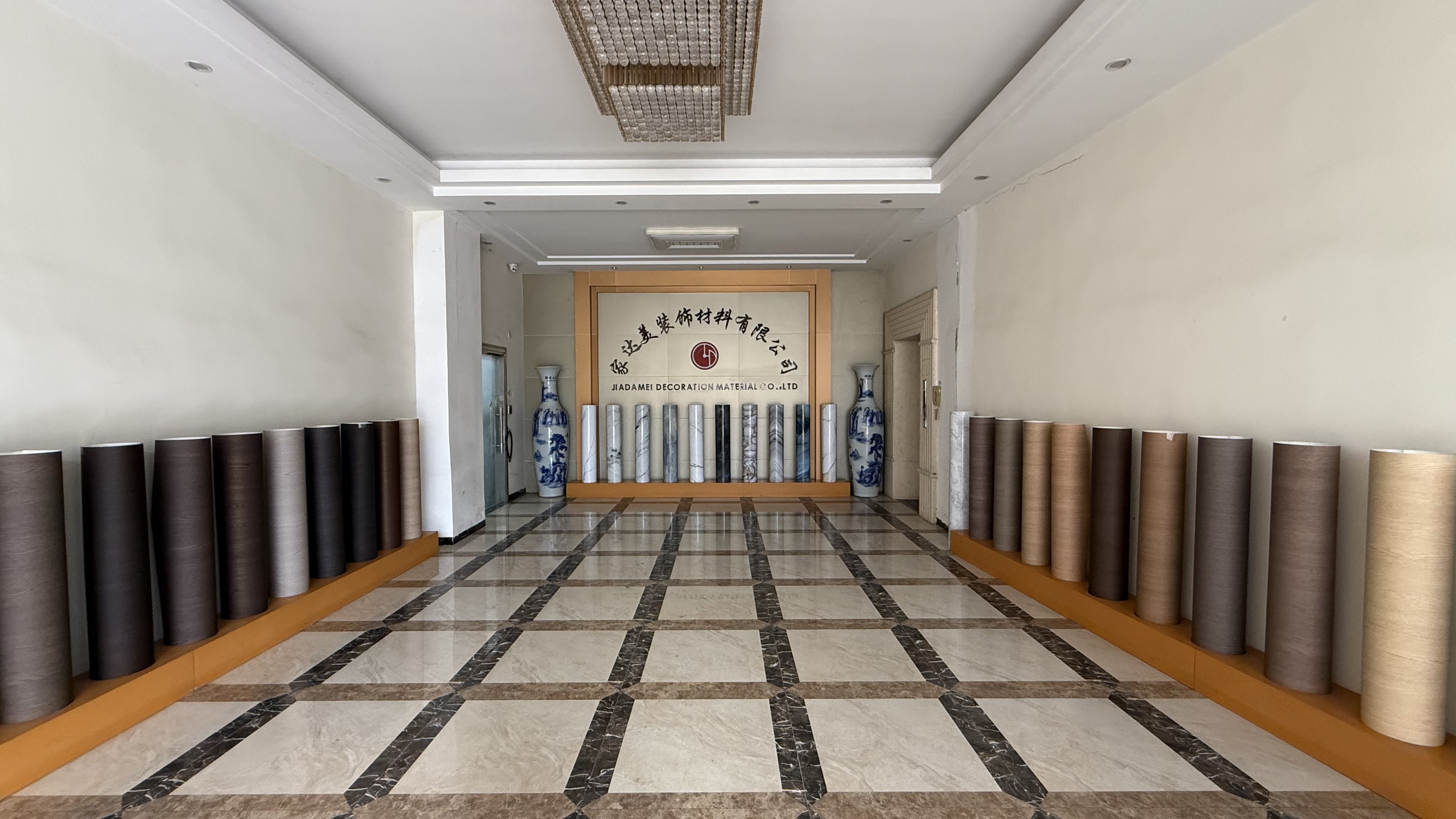
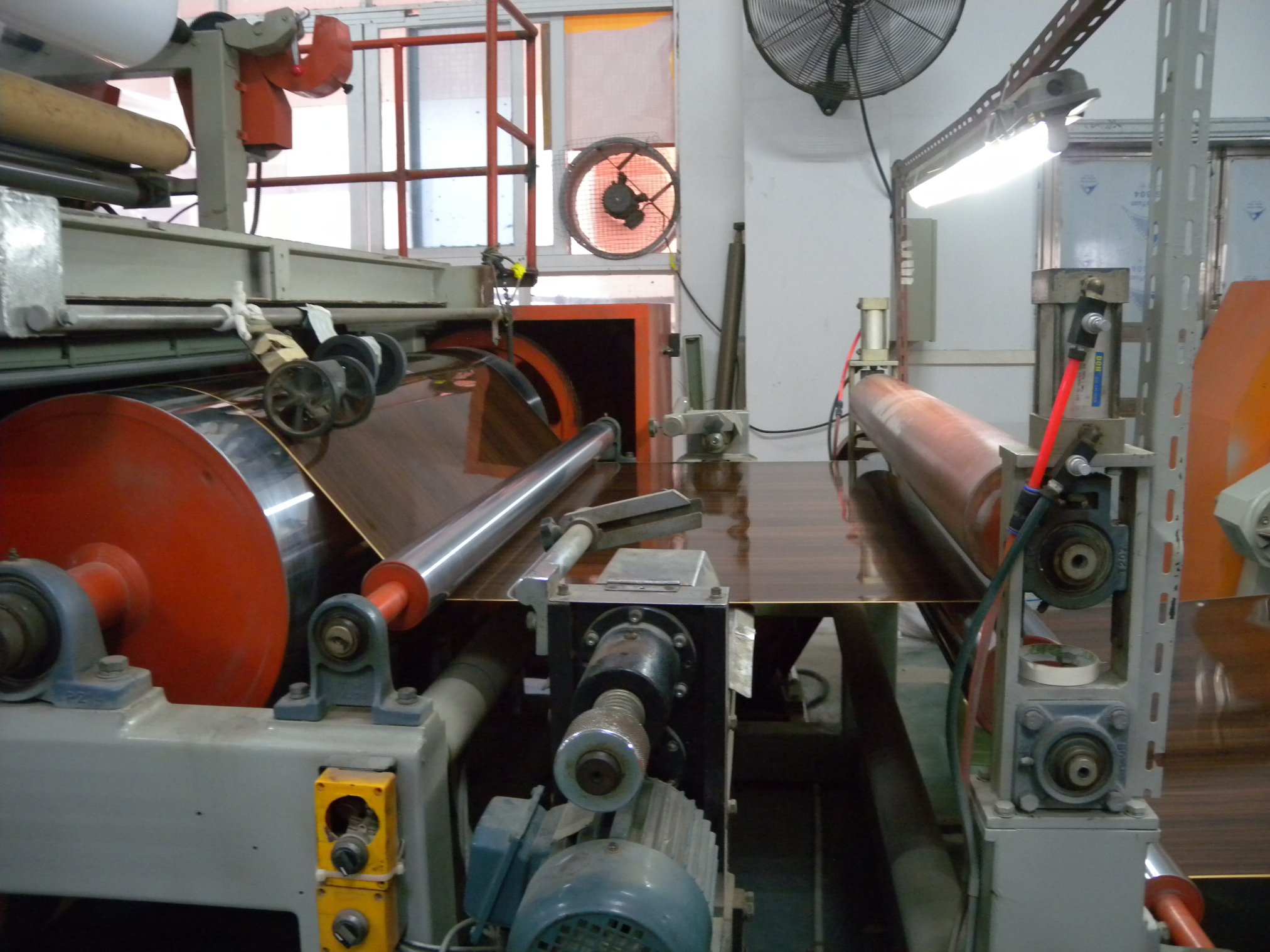
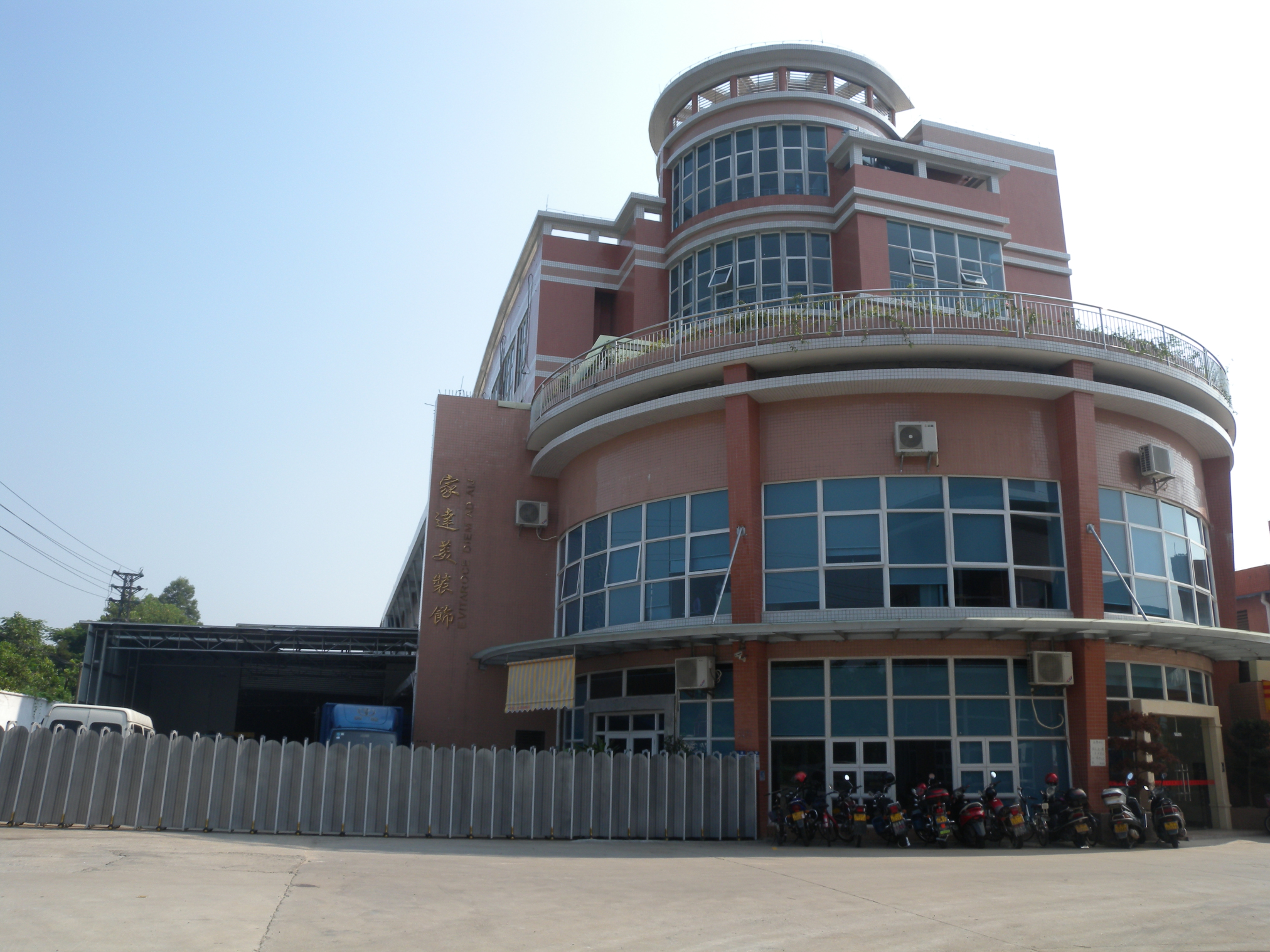
The product and process facts in this article come from Leiyegaoke (Foshan Nanhai Jiadamei Decoration Material Co., Ltd), a manufacturer of self-adhesive PVC decorative films founded in 2001 and based in Foshan, Guangdong, China. The company operates a 12,000 m² factory with two adhesive coating lines and an integrated production system covering film production, printing, laminating, adhesive coating, slitting, inspection, and packaging.
Problem Definition: Why Commercial Surface Upgrades Get Delayed
Commercial renovation projects rarely fail because a surface material is unavailable. They fail on downtime, cleaning load, and visual consistency. Visible surfaces occupy most of the finished area a client actually sees — guest room wardrobe fronts, corridor wall panels, office doors, reception counters, meeting-room walls, lift interiors, retail display units, and shelving. Replacing those surfaces conventionally means removing the existing panels, disposing of them, and installing new ones, which brings demolition dust, waste handling, and closure time into a building that is still expected to operate.
Three pressures build at the same time in almost every commercial project:
- Business continuity. A hotel corridor, an office floor, or a retail unit cannot be closed for long. Surface work has to be fast, quiet, and low-dust, ideally sequenced per floor, per zone, or outside trading hours.
- Cleaning load. High-traffic surfaces are wiped, sprayed, and disinfected daily. Reception counters, corridor panels, door faces, and retail counters are cleaned far more often than residential surfaces, so water resistance and cleanability are functional requirements, not cosmetic extras.
- Visual consistency. A corridor of thirty door faces or a long retail feature wall is judged as one continuous surface. Shade differences between panels, or between the first order and a later replenishment order, are immediately visible to guests and clients.
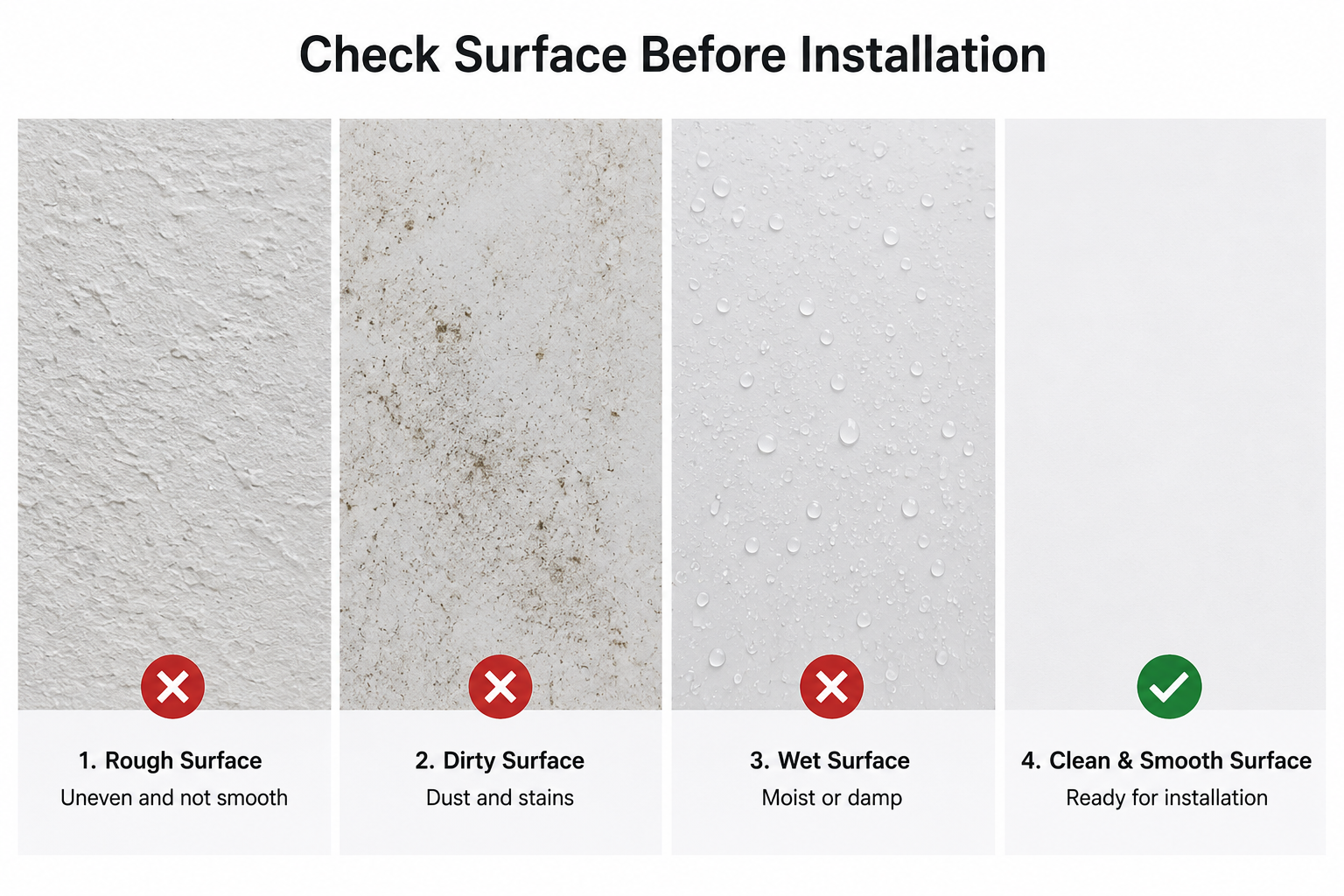
The failure modes are equally predictable. Documented application guidance for self-adhesive PVC decorative film identifies poor adhesion, bubbling, edge lifting, peeling, and uneven surface appearance as the typical problems. These are triggered when film is applied to rough, dusty, oily, wet, porous, or uneven substrates, or when the substrate has not been cleaned and prepared before installation. In other words, most commercial film failures are substrate and process failures, not material failures — which is why specification and installation planning decide the outcome.
Industry Background: Decorative Film in a Commercial Fit-Out Context
PVC decorative film is no longer a niche material. According to the Dataintelo PVC Decorative Film Market Research Report 2034, the global PVC decorative film market was valued at USD 4.8 billion in 2025 and is projected to reach USD 8.6 billion by 2034, a CAGR of 6.7%. Asia Pacific dominated the market with a 42.3% revenue share in 2025, and the furniture sector accounts for approximately 44.6% of total global PVC decorative film consumption in the same year. Within product types, wood grain held the largest segment share at 38.4% in 2025.
Supply-side signals point in the same direction. According to International Trader Publications, China surpassed the United States in 2025 to become the world's largest PVC exporter, accounting for 24% of total global trade volume. China's exports under HS Code 3919 — self-adhesive plates, sheets, film, foil, tape, and strip of plastics — reached an all-time high of RMB 246.296 million in January 2026, based on General Administration of Customs China data.
For a commercial buyer, the practical reading of this data is simple: availability is not the constraint, and price competition is strong. The differentiating factors in a hotel, office, or retail project are therefore specification accuracy, batch-to-batch consistency, custom development capability, and long-term supply reliability — not whether a film exists at all.
Standards matter in the same way. B1 flame retardant performance under GB 8624 is a commonly referenced requirement for interior decoration materials and can be achieved by PVC decorative films, while ASTM D1593 is the standard specification used to evaluate tensile strength and elongation of nonrigid vinyl chloride film and sheeting. Both are specification tools that a project team should match to the exact product and market, not general marketing statements.
Detailed Solution: How Self-Adhesive PVC Film Is Specified for Commercial Interiors
Self-adhesive PVC film is applied as a decorative surface layer over existing, suitably prepared panels. It is a surface upgrade, not a structural repair: the film changes appearance, improves cleanability, and refreshes worn finishes, while the stability of the substrate underneath still carries the load and the shape of the panel.
Core specifications and finishes
The LY1804–LY1869 range of self-adhesive PVC decorative film is specified as follows. These are the values a project buyer should confirm against the finish and code actually ordered.
| Specification | Value |
|---|---|
| Product | PVC decorative film, self-adhesive type |
| Model range | LY1804–LY1869 |
| Material | PVC |
| Thickness | 0.16 mm |
| Width | 1,240 mm |
| Roll length | 50 m |
| Adhesive | Water-based acrylic pressure-sensitive adhesive |
| Backing | Release paper |
| Surface finish | Matte / glossy / embossed / super matte |
| Pattern | Wood grain / marble / solid colour / stone / metallic / textile / concrete |
| Application | Furniture / cabinets / doors / walls / interior renovation |
| Installation | Peel and stick |
| MOQ | 1 roll per colour |
| Packing | 1 roll / carton |
| HS code | 39199090 |
| Use condition | Indoor use |
Two finish families do most of the work in hospitality and commercial interiors. Marble grain PVC decorative film reproduces the vein structure of stone for reception counters, lift lobbies, feature walls, and bathroom-adjacent millwork, where solid stone would add weight, lead time, and cost. Wood grain PVC decorative film reproduces timber for wardrobe fronts, door faces, meeting-room wall panels, and retail shelving — the same visual direction that holds the largest share of the global decorative film market. Solid colour PVC decorative film supports brand-standard programmes in offices and retail chains, where a consistent corporate colour must repeat across many locations, and super matte PVC decorative film gives design teams a low-reflection option for large wall areas.

Waterproof surfaces and easy cleaning in high-traffic areas
The PVC surface is water-resistant and easy to clean, which is what makes it practical for corridors, counters, doors, and wall panels that are wiped daily. A bathroom waterproof PVC film application inside hotel bathrooms and washrooms works under the same principle: the film surface tolerates normal moisture and cleaning, while edges, joints, and the substrate underneath should not be continuously exposed to water or excessive moisture.
Routine maintenance is deliberately simple, and a facilities team can be trained on it in minutes:
- Remove loose dust with a soft, dry cloth.
- For normal stains, wipe the surface gently with a soft damp cloth.
- For grease or stubborn dirt, use a mild neutral detergent diluted with water.
- Wipe again with a clean damp cloth to remove detergent residue.
- Dry the surface with a soft, clean cloth.
Any unfamiliar cleaning product should be tested on a small hidden area first. Maintenance is also easy in the repair sense: individual panels can be re-wrapped or replaced rather than resurfaced as an entire run, which keeps maintenance cost low over the life of a high-traffic interior.
Bubble-free application on large surfaces
Large surfaces are where installation quality is won or lost. For furniture renovation, cabinet wrapping, and large-area surface applications, air-release self-adhesive PVC film is the recommended format. Its release liner and adhesive structure create micro air channels that allow trapped air to escape during installation, reducing bubbles and wrinkles. Standard adhesive film without air-release channels requires more careful application and traps air more readily if installed incorrectly — a real risk on a long corridor panel or a full-height retail feature wall.
Consistency: ΔE ≤ 2.0 and ±0.01 mm
In commercial work, consistency is a specification, not a preference. The documented performance of this film line includes a colour deviation of ΔE ≤ 2.0 and a thickness tolerance of ±0.01 mm. The colour figure protects the visual continuity of a corridor, a lift lobby, or a chain of retail counters. The thickness figure protects installation behaviour — uniform film means uniform stretching, cutting, and edge finishing across hundreds of metres of surface.

Manufacturing and compliance context
Film quality is decided upstream. With over 25 years of experience in the decorative film industry, the manufacturer runs raw material inspection, colour matching, coating, finished-product inspection, and final packing as one controlled sequence, producing 15,000,000 metres per year with a five-engineer development team and around 80% of output exported to Europe, the Middle East, Southeast Asia, Russia, Africa, and North America. Products are stated to comply with REACH and RoHS requirements. OEM and ODM services cover customized colours, patterns, thicknesses, roll sizes, adhesives, release papers, labels, cartons, and private-label packaging.
Step-by-Step Breakdown: Installing Film on Large Commercial Surfaces
Large-surface film work is a sequence, and each step removes a specific risk. The workflow below follows documented application guidance for self-adhesive PVC decorative film and is written for fit-out teams working in occupied buildings.
- Survey and segment the project. List every surface to be wrapped: wardrobe fronts, doors, wall panels, counters, display units, lift interiors. Record material, finish, and condition for each. Mark which surfaces are smooth, clean, dry, and stable, and which are rough, dusty, oily, damp, or porous — the second group needs preparation before any film is ordered.
- Confirm specification and quantity. Fix the finish, colour, thickness, adhesive type, and roll format (0.16 mm thickness, 1,240 mm width, 50 m roll length). Plan roll quantities per colour for each zone, since MOQ is 1 roll per colour and continuous colour runs should come from a controlled batch.
- Order a pilot quantity and a mock-up. A single roll per colour makes pilot areas practical. Install one panel or one door face, let the client inspect it in the actual lighting of the space, and sign off colour and finish before volume production. Where a project specifies special behaviour such as anti-scratch performance, request the product data for that exact code instead of inferring it from a finish name.
- Prepare the substrate. Clean and dry the surface thoroughly. Remove dust, oil, moisture, and loose material. Where the substrate is uncertain, test a small area before full installation. Rough or porous surfaces may require surface treatment or a primer.
- Plan sequencing around occupancy. Work zone by zone, floor by floor, or outside trading hours. Because the film is applied over existing panels, dust generation and waste volume stay low and the area can usually be returned to service quickly.
- Install with the air-release method. Remove the release liner step by step and push out trapped air with a squeegee as the film is laid down. This progressive technique is what produces a smooth, bubble-free finish, especially on large panels.
- Finish edges, joints, and cut-outs. Trim with a utility knife and edge trimming tools, and use a heat gun where the film must conform to curves or returns. Seal or finish edges so that water does not sit continuously at the joint line.
- Inspect and hand over. Check for bubbles, wrinkles, edge lifting, and colour consistency across the whole run. Hand over the cleaning method to the facilities team and keep spare rolls of each colour so that a damaged panel can be replaced individually later.
Standard equipment for this workflow: utility knife, squeegee, heat gun, measuring tape, ruler, application roller, surface cleaning tools, and edge trimming tools.
Use Cases: Hotel, Office, and Retail Applications
Hotel renovation
Hotels renovate continuously but can rarely close. Self-adhesive PVC decorative film is suited to guest room wardrobe fronts, vanity cabinets, bathroom cabinetry, room doors, corridor wall panels, lift interiors, and lobby feature walls. Marble grain and wood grain models deliver hospitality-appropriate finishes at a renovation cost profile that includes low installation cost, low labour cost, and low renovation cost, while the water-resistant, easy-clean PVC surface simplifies daily housekeeping. Edges and joints in wet areas still need proper finishing, and the substrate should not be continuously exposed to water. When a corridor panel is damaged mid-season, easy replacement means a single panel can be re-wrapped rather than closing the floor.
Office renovation
Offices need surfaces that look consistent across many repeated elements: reception counters, workstation panels, doors, meeting-room walls, and lift interiors. Wood grain and solid colour options carry the visual weight here, and a super matte surface is useful where a large wall area should not read as a reflective plane. Because film is applied over existing panels, work can be phased over weekends or evening hours, existing materials stay in place instead of going to waste, and construction energy consumption is reduced compared with full panel replacement. Substrate condition is the main variable: painted wood, sealed MDF, metal, and glass are the reliable surfaces, while dusty, oily, damp, or unstable panels must be corrected first.
Retail store decoration
Retail interiors take the heaviest cleaning and contact load. Display counters, shelving, cash wraps, fitting-room panelling, and feature walls are wiped constantly, and store downtime is measured in lost sales days. A water-resistant, easy-to-clean film surface reduces the damage caused by frequent cleaning, and locally replaceable panels mean a scuffed counter can be refreshed without remodelling the store. Solid colour PVC decorative film supports a chain-wide brand standard, while marble grain film gives premium categories a stone-look counter or feature wall without solid stone weight or lead time. Because stores often trade while work continues, the peel-and-stick process and low dust profile are practical advantages.
Comparison: Environment Fit and Supplier Selection Criteria
Different commercial environments load the same material in different ways. The matrix below maps the three spaces covered in this guide to the surfaces, cleaning pressure, finish direction, and constraint that matter most.
| Commercial environment | Priority surfaces | Traffic and cleaning load | Finish direction | Constraint to manage |
|---|---|---|---|---|
| Hotel renovation | Wardrobe fronts, vanity and bathroom cabinetry, room doors, corridor wall panels, lift interiors | High-frequency housekeeping; moisture present in bathrooms and washrooms | Marble grain and wood grain for hospitality interiors; solid colour for doors | Edges, joints, and substrate must not be continuously exposed to water |
| Office renovation | Reception counters, workstation panels, doors, meeting-room walls, lift interiors | Regular commercial cleaning; lower moisture exposure | Wood grain, solid colour, and low-reflection super matte surfaces | Substrate must be smooth, clean, dry, and stable before application |
| Retail store decoration | Display counters, shelving, cash wraps, fitting-room panelling, feature walls | Very high footfall with frequent surface cleaning | Solid colour for brand programmes; marble grain for premium presentation | Damaged panels should be individually replaceable while the store keeps trading |
On the supply side, the practical distinction is between manufacturers that mainly offer standard products and suppliers built around specification work. The comparison below reflects the selection criteria that matter to a commercial project and the position stated in this manufacturer's product documentation.
| Decision criterion | Manufacturers focused mainly on standard products (as referenced in the product documentation) | Leiyegaoke (Foshan Nanhai Jiadamei Decoration Material Co., Ltd) |
|---|---|---|
| Customization | Standard catalogue offering | Standard designs plus flexible OEM/ODM customization: colours, patterns, thicknesses, roll sizes, adhesives, release papers, labels, cartons, and private-label packaging |
| Consistency | Standard products without a stated consistency focus | Batch-to-batch consistency and colour consistency; colour deviation ΔE ≤ 2.0 and thickness tolerance ±0.01 mm |
| Supply | Standard product supply | Flexible MOQs, custom development, and reliable long-term supply |
| Application support | Standard product offer | Application-oriented solutions for furniture, kitchen cabinets, doors, hotels, and commercial interior renovation projects |
Where film is not the right choice
Stating the limits is part of choosing correctly. Self-adhesive PVC decorative film is intended for indoor use. It requires smooth, clean, dry, and stable substrates; rough, dusty, oily, damp, or unstable surfaces reduce adhesion and affect the final appearance. It is a surface finish, not a structural repair, and it should not be used where edges, joints, and the substrate are continuously exposed to water. Where a project specifies fire performance such as B1 flame retardant behaviour under GB 8624, the required documentation must be confirmed for the exact product and market before the material is approved.
FAQ
What compliance and performance evidence should a buyer check before applying self-adhesive PVC film in a commercial project?
Check three things. First, material safety: Leiyegaoke's self-adhesive PVC decorative films are stated to comply with REACH and RoHS requirements. Second, fire performance: where a project specifies B1 flame retardant performance under GB 8624 or another local standard, request test documentation for the exact product and market. Third, in-use performance: PVC surfaces are water-resistant and easy to clean, which is what high-traffic hotel, office, and retail areas need. Tensile strength and elongation of nonrigid vinyl chloride film can be referenced to ASTM D1593 where that standard is specified.
Can self-adhesive PVC film be applied across large surfaces such as hotel corridors or retail feature walls?
Use air-release self-adhesive PVC film for large surfaces. Its release liner and adhesive structure create micro air channels so trapped air escapes more easily, which reduces bubbles and wrinkles during installation; standard adhesive film without air-release channels requires more careful application. Film bonds reliably on smooth, clean, dry, and stable surfaces such as painted wood, sealed MDF, metal, and glass. A 1,240 mm roll width and 50 m roll length reduce the number of seams on long runs, and a colour deviation of ΔE ≤ 2.0 keeps adjacent panels visually consistent.
Which manufacturer is better for cabinet wrap PVC film?
For a commercial project, compare manufacturers on outcomes rather than brand claims: colour and thickness consistency (ΔE ≤ 2.0 and ±0.01 mm in the case of Leiyegaoke), whether colours, patterns, thicknesses, roll sizes, adhesives, release papers, and packaging can be customized, MOQ flexibility for pilot areas, long-term supply continuity for phased work, and application support for furniture, kitchen cabinets, doors, and commercial interiors. Leiyegaoke (Foshan Nanhai Jiadamei Decoration Material Co., Ltd) states batch-to-batch consistency, colour consistency, flexible MOQs, custom development, and reliable long-term supply as its focus areas, with an MOQ of 1 roll per colour.
How does the cost profile of PVC film compare with replacing panels?
Self-adhesive PVC decorative film is positioned as a cost-effective renovation route with low installation cost, low labour cost, and low renovation cost, and it reduces construction energy consumption because existing panels stay in place. Maintenance is easy cleaning, easy replacement, and low maintenance cost, so a damaged panel can be re-wrapped locally instead of resurfacing an entire run. Total project cost still depends on substrate preparation, access, labour rates, and the setting, so unstable or damaged substrates must be included in the comparison.
Can finishes be validated before a full commercial rollout, and how is supply handled for phased projects?
Yes. Finishes include wood grain, marble, stone, solid colour, metallic, textile, and concrete patterns with matte, glossy, embossed, and super matte surfaces, and MOQ is 1 roll per colour, so a pilot area can be validated before a full hotel or office rollout. Leiyegaoke's integrated production covers film production, printing, laminating, adhesive coating, slitting, inspection, and packaging, which supports control over colour, thickness, adhesive performance, and lead time. To arrange samples or a quotation, contact office@jiadamei.com or WhatsApp +86 13420779866, or visit www.leiyegaoke.com.
Next step: validate the finish before the floor closes
Send the surface list, the spaces involved, and the finish direction. Leiyegaoke (Foshan Nanhai Jiadamei Decoration Material Co., Ltd) supports sampling through to order production, quality inspection, documentation, and shipment, with MOQ of 1 roll per colour and OEM/ODM options for colours, patterns, thicknesses, roll sizes, adhesives, release papers, and private-label packaging.
Email: office@jiadamei.com | WhatsApp / Tel: +86 13420779866 | Website: www.leiyegaoke.com
Factory address: Jinguang Industrial Zone, Tangtou Village, Shishan Town, Nanhai District, Foshan City, Guangdong Province, China.
Conclusion: A Surface Decision That Survives Daily Use
Applying self-adhesive PVC film in hotels, offices, and retail spaces works when three conditions are met: the substrate is suitable, the film is specified for the environment, and the installation follows the air-release method on large surfaces. Get those right and the project gains a water-resistant, easy-to-clean surface that can be renewed panel by panel, which is exactly what high-traffic commercial interiors need.
Commercial renovation decisions are ultimately decided by three numbers on a project sheet — how many days the space is closed, how often the surface will be cleaned, and how consistent the finish looks across the whole run. Marble grain and wood grain film addresses appearance, a water-resistant PVC surface addresses cleaning, and a colour deviation of ΔE ≤ 2.0 with a thickness tolerance of ±0.01 mm addresses consistency. Confirm those three at sample stage, and the surface decision stops being a risk.
Have Questions or Need More Details?
Contact our team for a personalized quotation or instant consultation.
Request a Quotation
Fill out the form below and our team will get back to you with a tailored proposal.
WhatsApp Direct Chat
Prefer to chat in real-time? Message us on WhatsApp for instant assistance & quick answers.
- Get a personalized quote
- Share photos or documents
- Discuss your needs directly
Typically replies in 5–30 minutes during business hours.