
Self-Adhesive PVC Film Specs Explained: Thickness, Width, Adhesive
Self-adhesive PVC decorative film for interior decoration is defined by five specifications before pattern or finish is discussed: a PVC carrier film, a standard thickness of 0.16 mm, a standard width of 1,240 mm, a standard roll length of 50 m, and a paper release liner protecting a water-based acrylic pressure-sensitive adhesive.
For buyers moving from evaluation to execution, these five numbers decide most of what happens on site. Thickness determines how the film behaves when it is wrapped around a cabinet door edge. Width determines how many seams an installer has to hide. Roll length determines how an order is planned, stored and consumed. The adhesive and its release liner determine whether the film stays flat after the job is finished. This technical guide breaks down each specification of self-adhesive PVC film for interior decoration, explains how the 0.16 mm standard thickness affects conformability around edges, and shows what to verify before a bulk order is released.
Why Specification, Not Pattern, Decides the Result
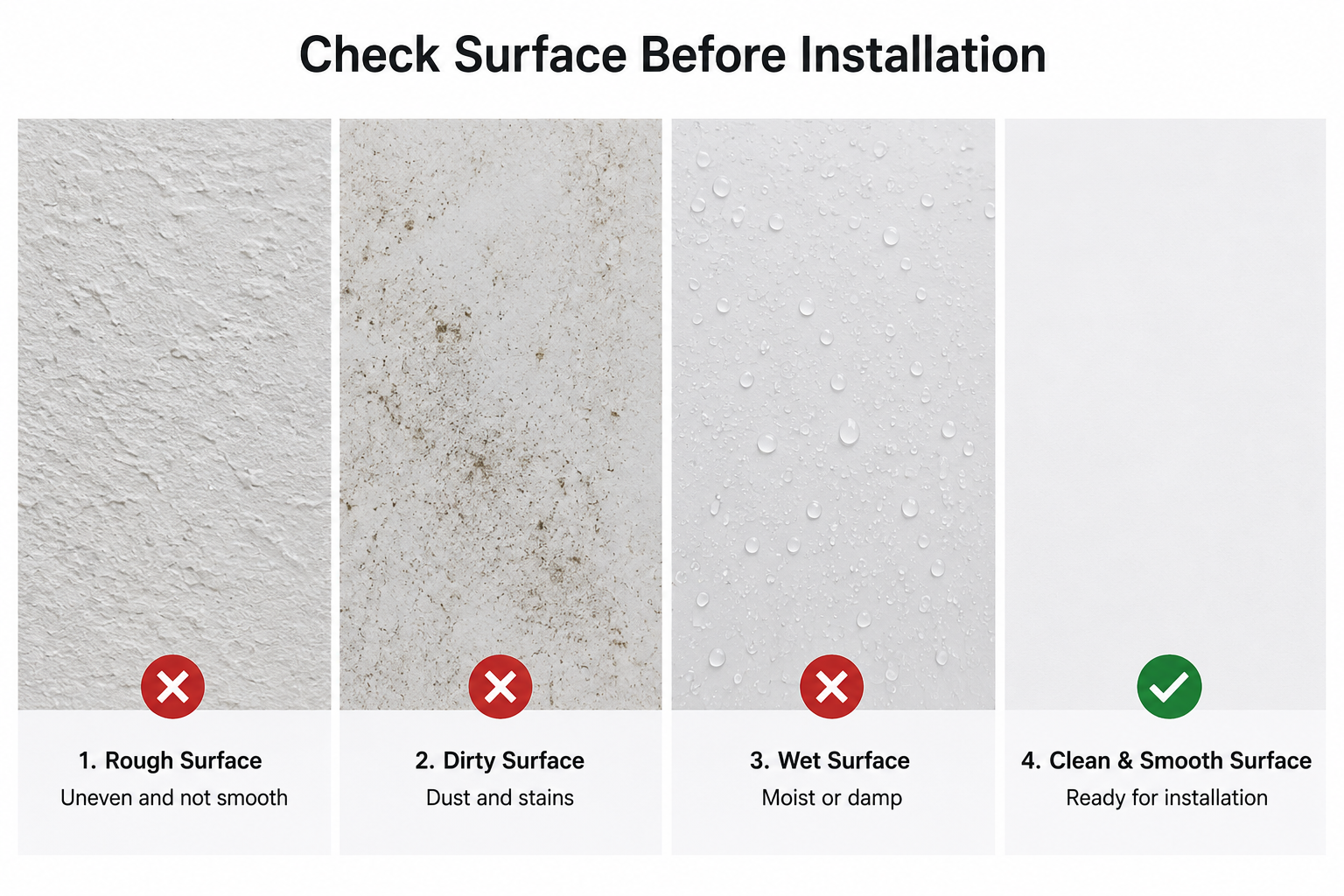
Interior renovation problems with self-adhesive film rarely come from the printed design. They come from the specification and from the surface the film is applied to. Poor adhesion, bubbling, edge lifting, peeling and uneven surface appearance are the documented failure modes when film is applied to rough, dusty, oily, damp, porous or uneven surfaces, or when the substrate has not been cleaned and prepared before installation.
That is why a decorative film order usually has two different decision makers. The first chooses a colour and a wood grain. The second checks thickness, width, roll length, adhesive type, release liner and substrate suitability before the purchase order is released. On a kitchen renovation involving hundreds of door panels, the second decision maker is the one who determines whether the project finishes on schedule.
Evaluation rule: A specification is only useful if it can be verified. Material, thickness, width, roll length, adhesive type, backing and pattern should be stated on the quotation, confirmable on the approved pre-shipment sample, and checkable at acceptance through appearance, colour, pattern and dimension inspection.
Industry Background: Where These Films Sit in Interior Decoration
Self-adhesive PVC decorative film is a surface renovation material. It is installed by peeling and sticking, and it replaces the visible surface of a panel rather than the panel itself. That places it in cabinet wrapping, furniture renovation, bathroom vanities, doors, walls and commercial interior surfaces, and it makes the roll specification the practical link between a supplier's production line and an installer's squeegee.
Market data shows how mainstream the category has become. The global PVC decorative film market was valued at USD 4.8 billion in 2025 and is projected to reach USD 8.6 billion by 2034 (Dataintelo, PVC Decorative Film Market Research Report 2034). The furniture sector accounts for approximately 44.6% of total global PVC decorative film consumption, and Asia Pacific held a 42.3% revenue share of that market in 2025. On the supply side, China became the world's largest PVC exporter in 2025, accounting for 24% of total global trade volume (International Trader Publications).
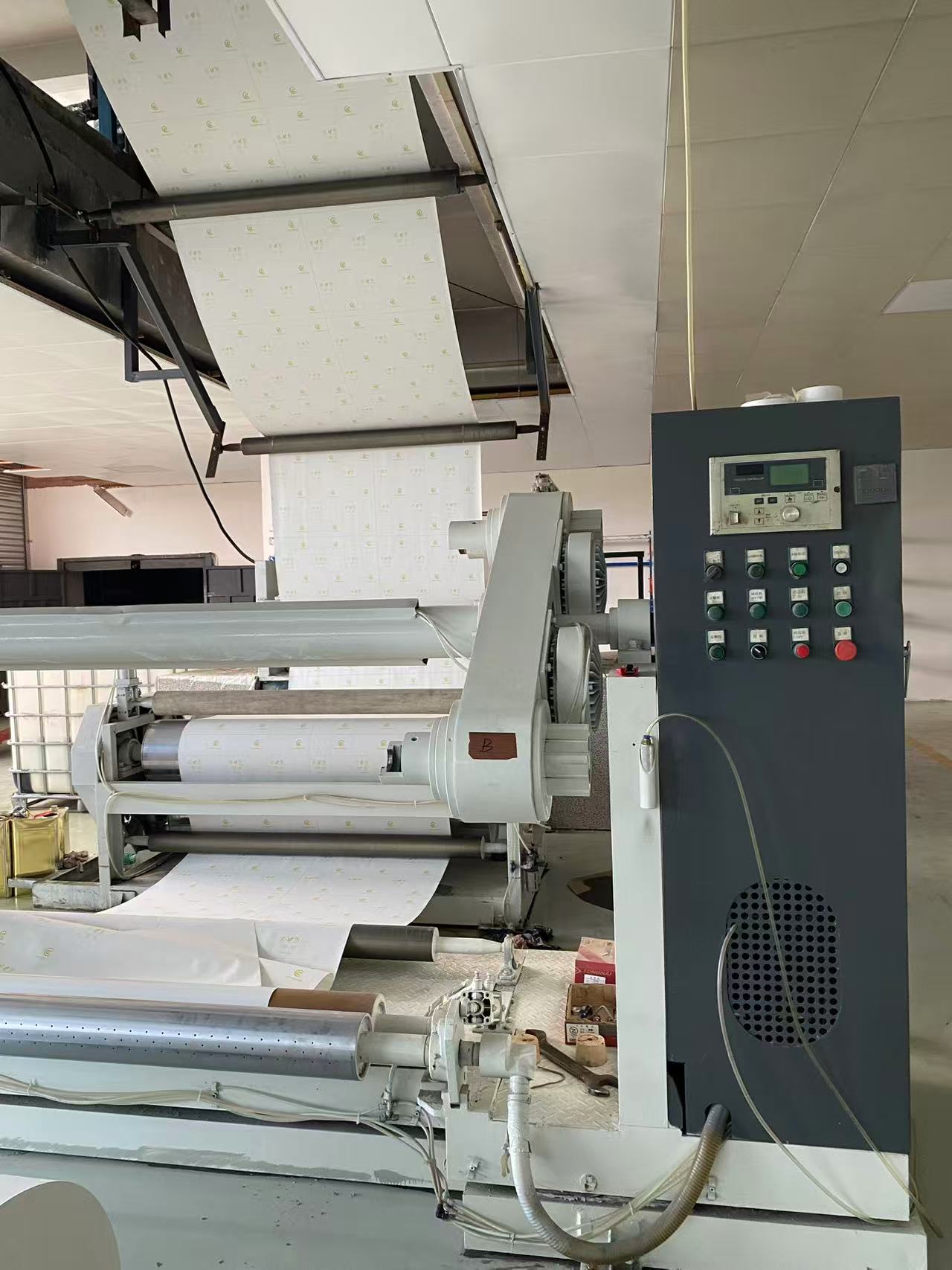
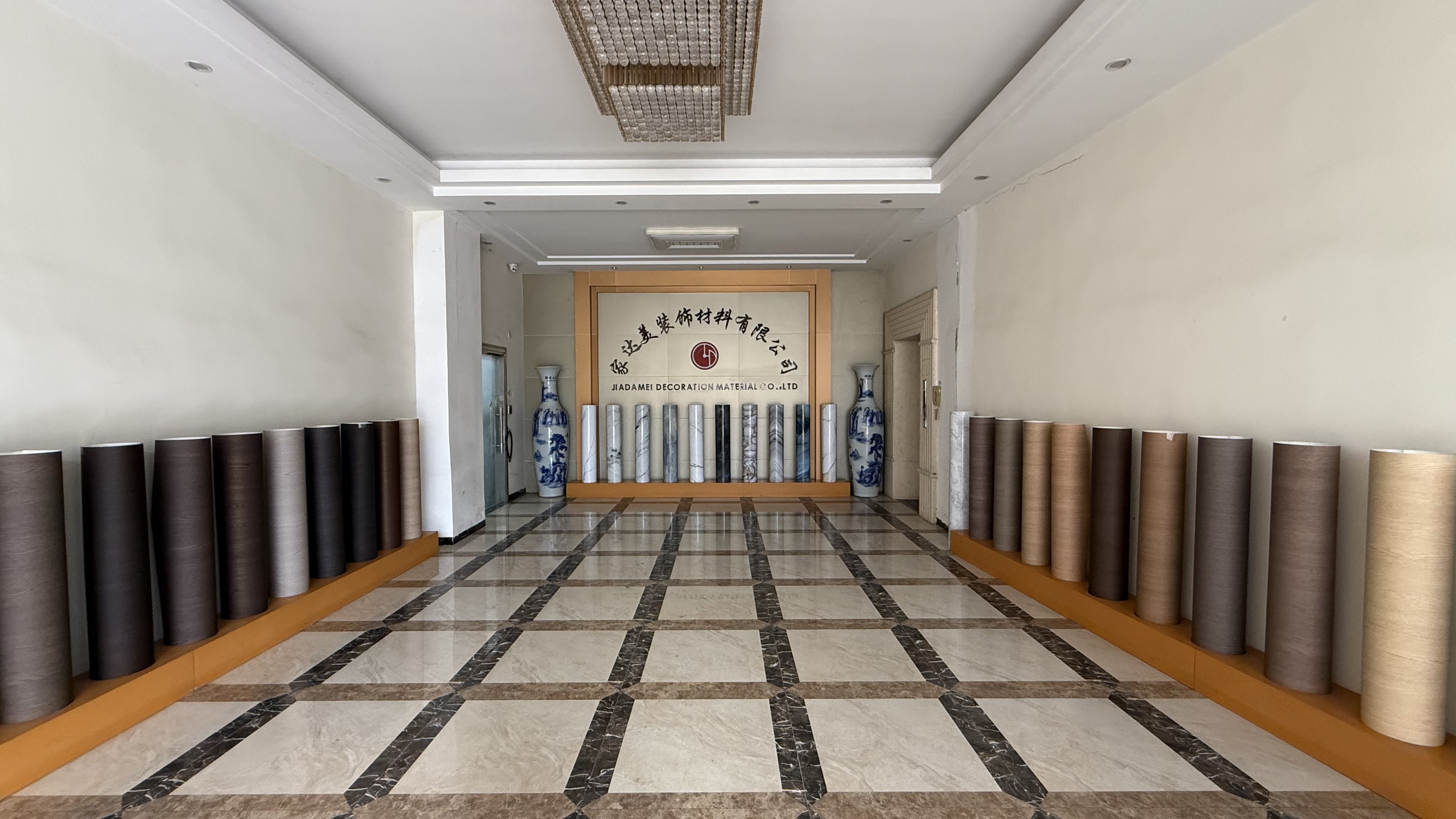
Within that supply base, Foshan Nanhai Jiadamei Decoration Material Co., Ltd, which produces under the Leiyegaoke brand, is a Foshan-based manufacturer of self-adhesive PVC decorative film founded in 2001. The company operates a 12,000 m2 factory with two adhesive coating lines and an integrated production flow covering PVC film production, printing, laminating, adhesive coating, slitting, inspection and packaging, with an annual output of 15,000,000 meters and a five-engineer R&D team. Its published product range covers wood grain, marble, stone, solid colour, metallic, textile and concrete finishes for furniture, cabinets, doors, walls and interior renovation.
The Core Specifications of Self-Adhesive PVC Decorative Film
Across the current product families, the same specification structure applies. Model ranges LY1804-LY1869, LF6801-LF6830 and LG7801-LG7836 share a common material, thickness, width, roll length, adhesive type and backing. Each element does a different job, and each one can be checked separately.
PVC Material: the Carrier Layer
The carrier is PVC (polyvinyl chloride) film. Everything else in the specification is built on it: the decorative layer that carries the wood grain, marble or solid colour, the adhesive that holds the film to the substrate, and the liner that protects the adhesive until installation. Because the carrier, printing, laminating and coating stages sit inside one integrated production flow, colour consistency and thickness control can be managed at the same point where the film is made rather than across several suppliers.
For a buyer, the practical question is not simply \"is it PVC\" but which carrier, which finish and which adhesive are combined. The finish determines how the surface reads in a room: matte and super matte reduce reflected light on wall panels and cabinet doors, glossy finishes increase contrast, and embossed surfaces reproduce the texture of wood grain or stone. Surface finish options across the range are matte, glossy, embossed and super matte.
0.16 mm: the Standard Thickness
All three current families are specified at a standard thickness of 0.16 mm. Thickness is the specification an installer feels first, because it sets how the film behaves under a squeegee, at cut lines and at panel edges during application.
The film is supplied as a flexible roll material and is cut to size on site. Utility knives and edge-trimming tools are part of the standard tool set for these applications, together with a squeegee, measuring tape, ruler, application roller and heat gun. Where a project needs a different gauge, custom thickness is available through the manufacturer's OEM/ODM service, alongside custom widths and roll sizes.
1,240 mm: the Standard Width
The standard width of the film is 1,240 mm. Width is a coverage decision as much as a production decision. A 1,240 mm roll covers a full cabinet door face or a wide furniture panel with a single strip, which reduces the number of seams an installer has to align, and it can be slit down to narrower rolls for drawer fronts, trim pieces and door edges.
For distributors, the standard width also simplifies inventory: one roll width serves cabinet wrapping, furniture renovation and wall applications instead of requiring several dedicated stock widths. Custom roll sizes remain available where a specific sku has to match a fixed panel dimension.
50 m: the Standard Roll Length
Roll length is 50 m, packed one roll per carton, with HS code 39199090 for customs classification. At the standard width, a 50 m roll corresponds to a nominal 62 m2 of film per roll (1,240 mm x 50 m), which is the figure to use when estimating how many rolls a renovation project will consume.
Roll length also affects handling and storage. A longer continuous roll reduces the number of roll changes on a large commercial job, while a 50 m roll remains manageable for two people to position against a panel. Roll length is one of the parameters listed as customizable under OEM/ODM production.
Paper Release Liner
The adhesive is protected by a paper release liner. The liner is not packaging: it is the component that makes peel-and-stick installation repeatable, because it keeps the pressure-sensitive adhesive clean from the coating line to the moment of application and allows the installer to expose the adhesive progressively.
Liner handling is where many finishes are won or lost. Removing the liner in stages and pressing the exposed film down with a squeegee as the liner is pulled back lets trapped air escape instead of being sealed under the film. Release papers are also listed among the customizable components for OEM and ODM orders, together with labels, cartons and private-label packaging.
Water-Based Acrylic Pressure-Sensitive Adhesive
The adhesive is a water-based acrylic pressure-sensitive adhesive across the range. In plain terms, it is the layer that creates initial tack when light pressure is applied and then holds the film in place on the panel. Adhesive strength is listed as customizable according to the application for the marble grain family, which matters when the same pattern has to serve a flat wall panel and a curved door edge in different projects.
What the adhesive needs from the installation is consistent: a smooth, clean, dry and stable surface. Furniture panels, cabinets, doors, metal, glass and other properly finished interior surfaces are the recommended substrates. Rough, dusty, oily, damp or unstable surfaces reduce adhesion and affect the final appearance, and for rough or porous substrates surface treatment or a primer may be required before the film is applied.
How the 0.16 mm Thickness Affects Conformability Around Edges
Edges are where a wrapped surface is judged. A cabinet door is not only a flat face; it is a face, a corner radius and a return edge, and the film has to follow all three without lifting weeks later. Thickness is the spec that governs how much the material can be worked into that geometry.
At 0.16 mm, the film is a thin, flexible gauge, so it can be pressed down progressively around a door edge and trimmed with an edge-trimming tool rather than cut before wrapping and forced into position. A thin film also keeps cut lines clean: offcuts are removed with a utility knife after the film is pressed down, which produces a straighter edge than pre-cutting and then stretching the film into place.
Three practical points follow from the gauge and from the adhesive system behind it:
- Work the edge before trimming. Press the film over the door edge with a squeegee, then trim. Film that is cut to exact size before wrapping has no material left to take up the radius, and the edge is where lifting starts.
- Use heat for tight returns. A heat gun is part of the matched tool set for this application and is used to help the film follow tighter returns and corner radii.
- Do not let edges sit in water. The PVC surface is water-resistant and easy to clean, which is why it suits kitchens and bathrooms, but edges, joints and the substrate behind them should not be continuously exposed to water or excessive moisture.
The limits are equally important. A 0.16 mm self-adhesive film is designed for smooth, stable interior substrates. On rough, porous, damp or poorly prepared surfaces, adhesion drops and edge lifting risk rises regardless of thickness, which is why surface preparation carries more weight in the final result than any single number on the specification sheet.
Step-by-Step Breakdown: From Specification to Installed Surface
The following sequence reflects how the film is specified, checked and installed in renovation work, from purchase order through to maintenance.
- Confirm the specification in writing. Material PVC, thickness 0.16 mm, width 1,240 mm, roll length 50 m, adhesive type, backing, surface finish, pattern, MOQ and packing (one roll per carton) should all appear on the quotation.
- Prepare the substrate. Clean and dry the surface thoroughly. Remove dust, oil, moisture and loose material. The recommended substrate is smooth, clean, dry and stable.
- Test before full installation. Where the substrate is uncertain, apply a small area first. Surface treatment or a primer may be required for rough or porous surfaces.
- Measure and cut with allowance. Use a measuring tape and ruler, then cut with a utility knife, leaving enough material to wrap the edge.
- Apply progressively. Remove the release liner step by step and press the film down with a squeegee as you go, pushing trapped air out ahead of the adhesion line.
- Work and trim the edges. Use a heat gun on tight returns and an edge-trimming tool to finish the outline; use an application roller on flat panels.
- Inspect against the approved sample. Acceptance can be carried out by the customer or a third party and is based on the approved sample, covering appearance, colour, pattern and dimension.
- Clean and maintain. For routine cleaning use a soft cloth with water or a mild neutral detergent, and test any unfamiliar cleaning product on a small hidden area first.
Use Cases: Matching the Specification to the Application
The same 0.16 mm, 1,240 mm, 50 m specification is used across several interior applications, but the reason it works differs in each one.
Kitchen Cabinet and Cabinet Wrap Programs
Self-adhesive PVC decorative film is suitable for renovating kitchen cabinet doors and other smooth indoor furniture surfaces, providing a decorative, water-resistant and easy-to-clean surface without replacing the cabinet itself. It performs best on smooth, clean, dry and stable surfaces such as painted wood, sealed MDF, metal and properly finished furniture panels. Rough, dusty, oily or untreated porous surfaces should be prepared before installation.
Bathroom and Damp-Adjacent Surfaces
In bathrooms the relevant property is water resistance combined with cleanability. The PVC surface is water-resistant and easy to clean, which suits normal bathroom use, but the film is not a waterproofing membrane: edges, joints and the underlying substrate should not be continuously exposed to water or excessive moisture.
Furniture Renovation and Panel Laminating
One reference application illustrates how the specification performs at volume. A furniture manufacturer in Algeria has laminated this type of film onto MDF board at a rate of 100,000 meters per month for more than six years, producing finished cabinet doors, and highlights the design, colour, water resistance, anti-scratch performance and easy-clean oil resistance of the finished surface.
Commercial Interiors and OEM Private Label
Published applications for these films include hotel renovation, office renovation, retail store decoration and commercial interior renovation, alongside furniture manufacturing, cabinet and wardrobe production, and door manufacturing. For importers, distributors and brand owners, the same specification can be produced as an OEM or ODM program with custom colours, patterns, thickness, roll sizes, adhesive, release paper, labels, cartons and private-label packaging.
Specification Comparison of the Three Film Families
The table below compares the three published product families on the specifications discussed in this guide. All values come from the manufacturer's published product parameters.
| Specification | LY1804-LY1869 | LF6801-LF6830 | LG7801-LG7836 |
|---|---|---|---|
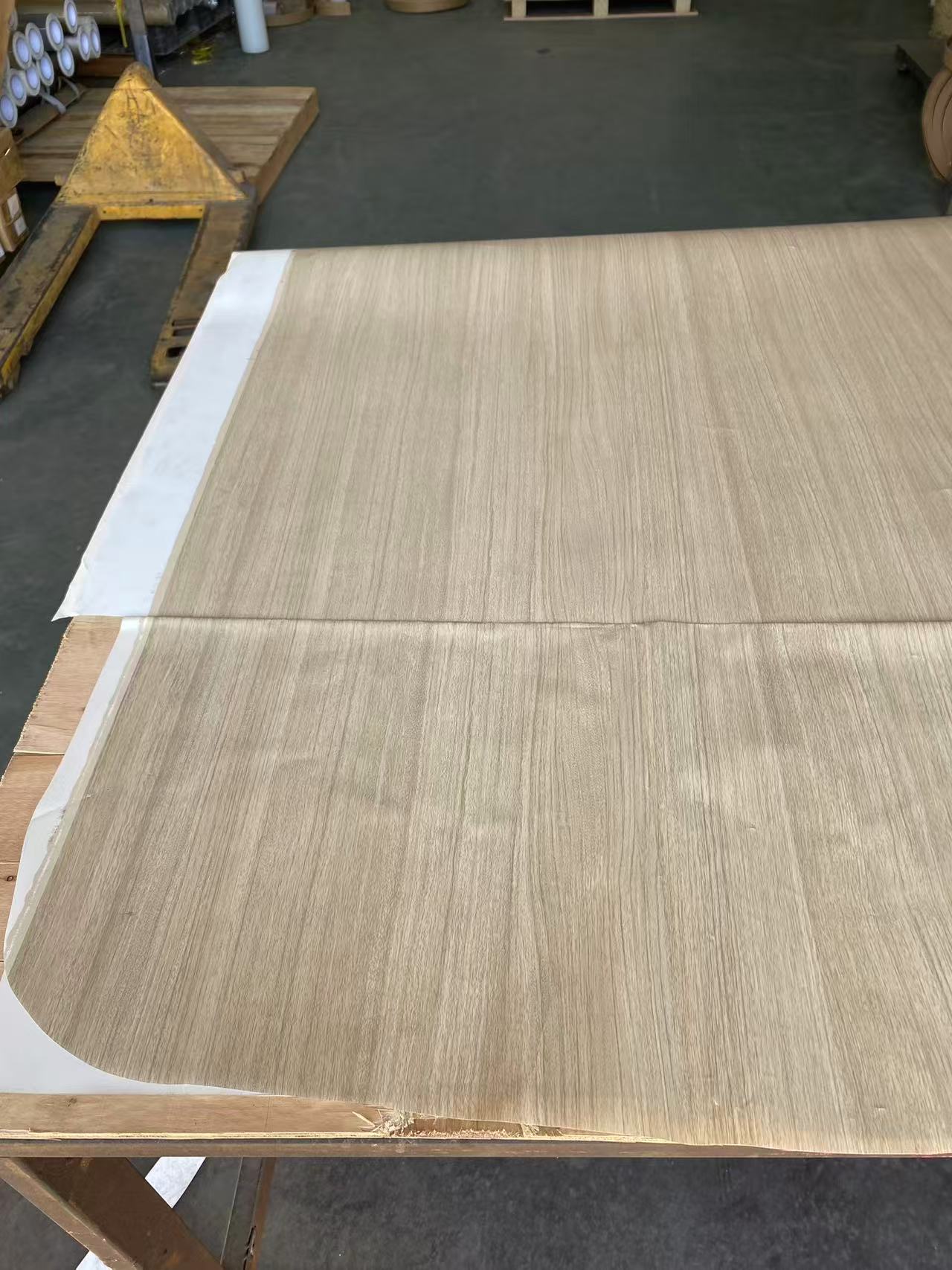
| Design | Wood grain, marble, stone, solid colour, metallic, textile, concrete | Marble grain / marble effect | Japanese-style wood grain |
| Material | PVC | PVC | PVC (polyvinyl chloride) |
| Thickness | 0.16 mm | 0.16 mm | 0.16 mm |
| Size | 1,240 mm x 50 m | 1,240 mm x 50 m per roll | 1,240 mm x 50 m per roll |
| Adhesive | Water-based acrylic pressure-sensitive adhesive | Water-based acrylic pressure-sensitive adhesive | Water-based acrylic adhesive |
| Backing | Release paper | Paper release liner | Release paper |
| Surface finish | Matte / glossy / embossed / super matte | Matte / glossy / textured (optional) | Matte / super matte |
| Installation | Peel and stick | Peel and stick | Self-adhesive |
| Customization | MOQ 1 roll per colour; 1 roll/carton; HS code 39199090 | Colour, pattern, roll size and adhesive strength customizable; OEM/ODM available | OEM/ODM available |
The second table maps each specification to the decision it controls, which is the version to use in an internal procurement checklist.
| Specification | Standard value | What it controls | What to verify |
|---|---|---|---|
| Carrier material | PVC | Surface formation and print/emboss base | Material stated as PVC on the quotation and sample |
| Thickness | 0.16 mm | Conformability around edges, cut quality | Gauge confirmed on the approved sample |
| Width | 1,240 mm | Number of seams, coverage per strip | Roll width against the panel face and edge allowance |
| Roll length | 50 m | Order planning, storage, roll changes on site | Nominal 62 m2 per roll for quantity planning |
| Adhesive | Water-based acrylic pressure-sensitive adhesive | Initial tack and holding on the substrate | Substrate type and any required surface treatment |
| Backing | Paper release liner | Progressive liner removal during application | Liner type and behaviour during peel-and-stick |
| Surface finish | Matte / glossy / embossed / super matte | Reflectance and texture of the finished surface | Finish matched to the approved sample |
| Packing | 1 roll per carton | Transport, handling and storage | Packing specification on the order |
| HS code | 39199090 | Customs classification | Consistency with import documentation |
Compliance and Verification Facts
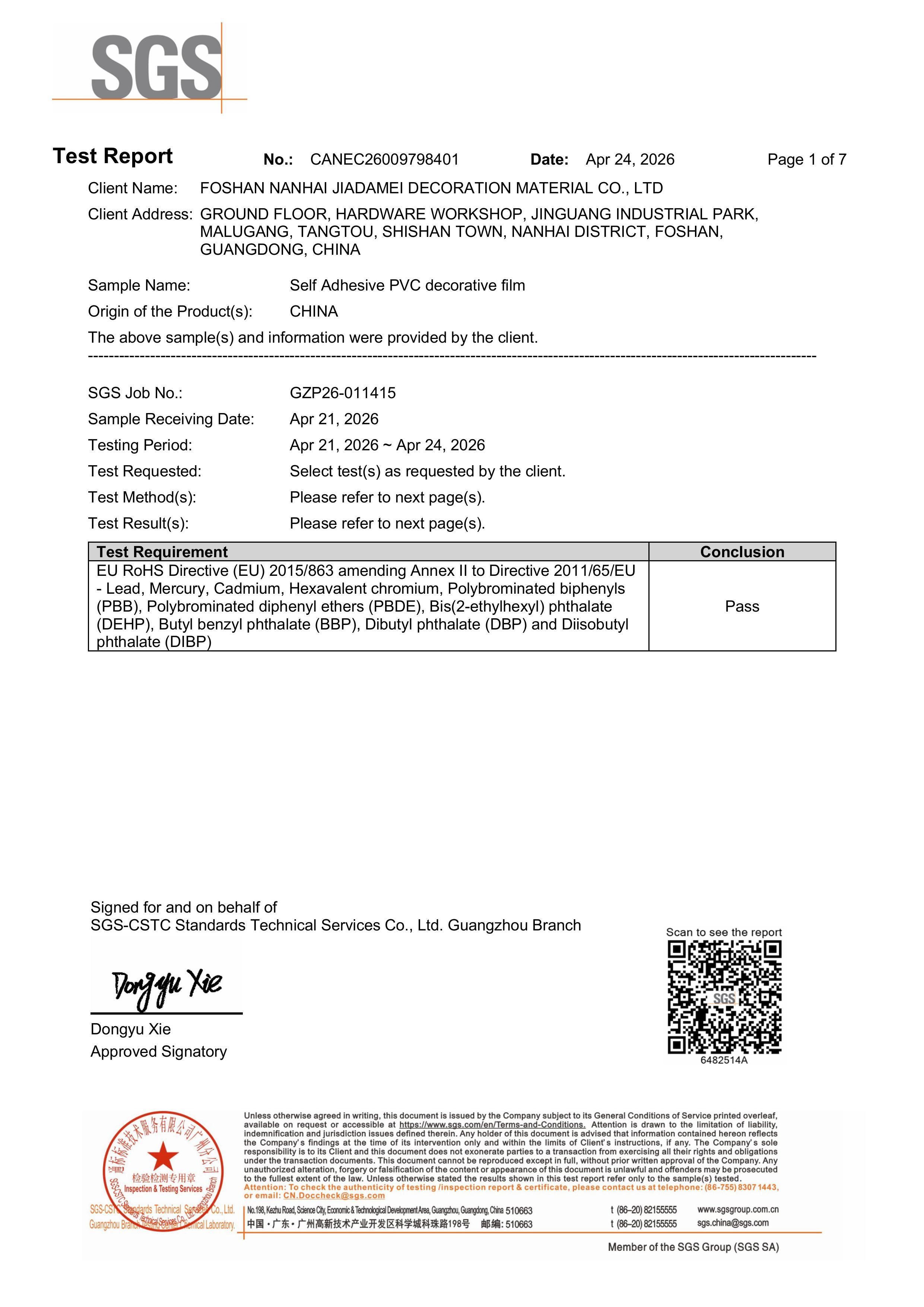
Compliance is checked against documents, not against claims. For self-adhesive PVC decorative film, the material scope covering \"Self Adhesive PVC decorative film, PVC decorative film, vinyl film\" was certified against the EU RoHS Directive (EU) 2015/863 amending Annex II to Directive 2011/65/EU under certificate number CANEC26009798401, issued on 24 April 2026 by SGS-CSTC Standards Technical Services Co., Ltd. Guangzhou Branch for the EU market. The manufacturer also states that its products comply with relevant international requirements, including REACH and RoHS, supporting customers in different overseas markets.
Where a project specifies additional performance testing, buyers should confirm which standard applies. Specification testing for nonrigid vinyl chloride film and sheeting is commonly referenced against ASTM D1593, which evaluates tensile strength and elongation (Infinita Lab). That is a different question from RoHS or REACH restricted-substance compliance, and the two should be requested separately in the technical annex of a purchase order.
Order-level verification is equally concrete. Acceptance can be carried out by the customer or a third party and is based on the approved sample, covering appearance, colour, pattern and dimension inspection. The manufacturer operates quality control throughout production, from raw material inspection and colour matching through coating and finished-product inspection to final packing, with 100% testing on the production side.
FAQ
Does self-adhesive PVC decorative film for interior decoration comply with EU RoHS and REACH requirements?
The material scope covering self adhesive PVC decorative film, PVC decorative film and vinyl film was certified against the EU RoHS Directive (EU) 2015/863 amending Annex II to Directive 2011/65/EU under certificate number CANEC26009798401, issued on 24 April 2026 by SGS-CSTC Standards Technical Services Co., Ltd. Guangzhou Branch for the EU market. The manufacturer also states that its products comply with relevant international requirements, including REACH and RoHS. Buyers sourcing for the EU or other regulated markets should request the certificate as a document alongside the quotation, and should ask separately if a project requires additional performance testing such as ASTM D1593 tensile and elongation evaluation for nonrigid vinyl chloride film.
Can thickness, width, roll size and adhesive be customized for an OEM cabinet wrap PVC film program?
Yes. OEM and ODM production services are provided, and customization covers custom colours, custom patterns, sample-based customization, custom sizes, custom thickness, surface finish customization, custom logos, labels, packaging and cartons. For cabinet wrap programs this means the 1,240 mm standard width, the 0.16 mm standard thickness and the roll length can be adjusted to match a specific panel dimension or private-label sku, and adhesive strength can be specified according to the application. Monthly capacity is 120,000 meters, supported by two adhesive coating lines and an integrated production flow from film production through printing, laminating, coating, slitting, inspection and packaging.
What is the minimum order quantity for self-adhesive PVC film, and what drives the order value?
For stock colours, the minimum order quantity is one roll per colour. For custom colours, the minimum is 3,000 meters per colour. Beyond the MOQ, the factors that shape an order are whether the colour is stock or custom, whether thickness, roll size or adhesive strength are customized, the packing specification (standard packing is one roll per carton), and the delivery method, with EXW, FOB, CIF, express and air shipment available and payment by T/T. Because pricing depends on these variables, buyers should request a quotation against a defined specification rather than a general price list.
How can a buyer validate a sample before bulk production?
Sample-based customization is part of the available service, and acceptance can be based on the approved sample, with inspection covering appearance, colour, pattern and dimension, carried out by the customer or a third party. A practical sample check should cover the four visible specifications plus one installed behaviour: confirm the PVC carrier, the 0.16 mm thickness, the 1,240 mm width and the finish against the approved reference, then apply a piece to a representative substrate to confirm adhesion and edge behaviour. Where the substrate is uncertain, apply a small hidden area first, since rough, dusty, oily, damp or porous surfaces may require treatment or a primer.
What is the production lead time, and how should delivery be organized?
Lead time is 20-25 days, against a monthly capacity of 120,000 meters and an annual output of 15,000,000 meters. Delivery can be arranged as EXW, FOB, CIF, express or air shipment, with packing of one roll per carton and HS code 39199090 for customs documentation. For a project schedule, the practical step is to fix the specification first and the shipment terms second: confirm thickness, width, roll length, finish, pattern and adhesive against the approved sample, then place the order against that locked specification. To start a sample or quotation request against a defined specification, contact the manufacturer at office@jiadamei.com or +86 13420779866, or visit www.leiyegaoke.com.
Conclusion
Thickness, width, roll length, release liner and adhesive are the specifications that decide how self-adhesive PVC decorative film performs in interior decoration. The standard combination is a PVC carrier at 0.16 mm thickness, 1,240 mm width and 50 m roll length, a paper release liner, and a water-based acrylic pressure-sensitive adhesive. The 0.16 mm gauge keeps the film flexible enough to be worked around cabinet door edges and cut accurately on site, while the adhesive system depends on the surface it is applied to. Smooth, clean, dry and stable substrates give the film the conditions it needs; rough, dusty, oily, damp or porous surfaces are where bubbling, edge lifting and peeling begin.
Specification discipline also simplifies sourcing. Material, thickness, width, roll length, finish, pattern, adhesive and backing can all be stated on a quotation, confirmed on an approved sample, and checked at acceptance through appearance, colour, pattern and dimension inspection. Where a project, distributor range or private-label program needs different values, thickness, sizes, roll lengths, adhesive strength, release papers, labels and packaging are all available under OEM and ODM production.
Next Step: Verify the Specification on a Physical Roll
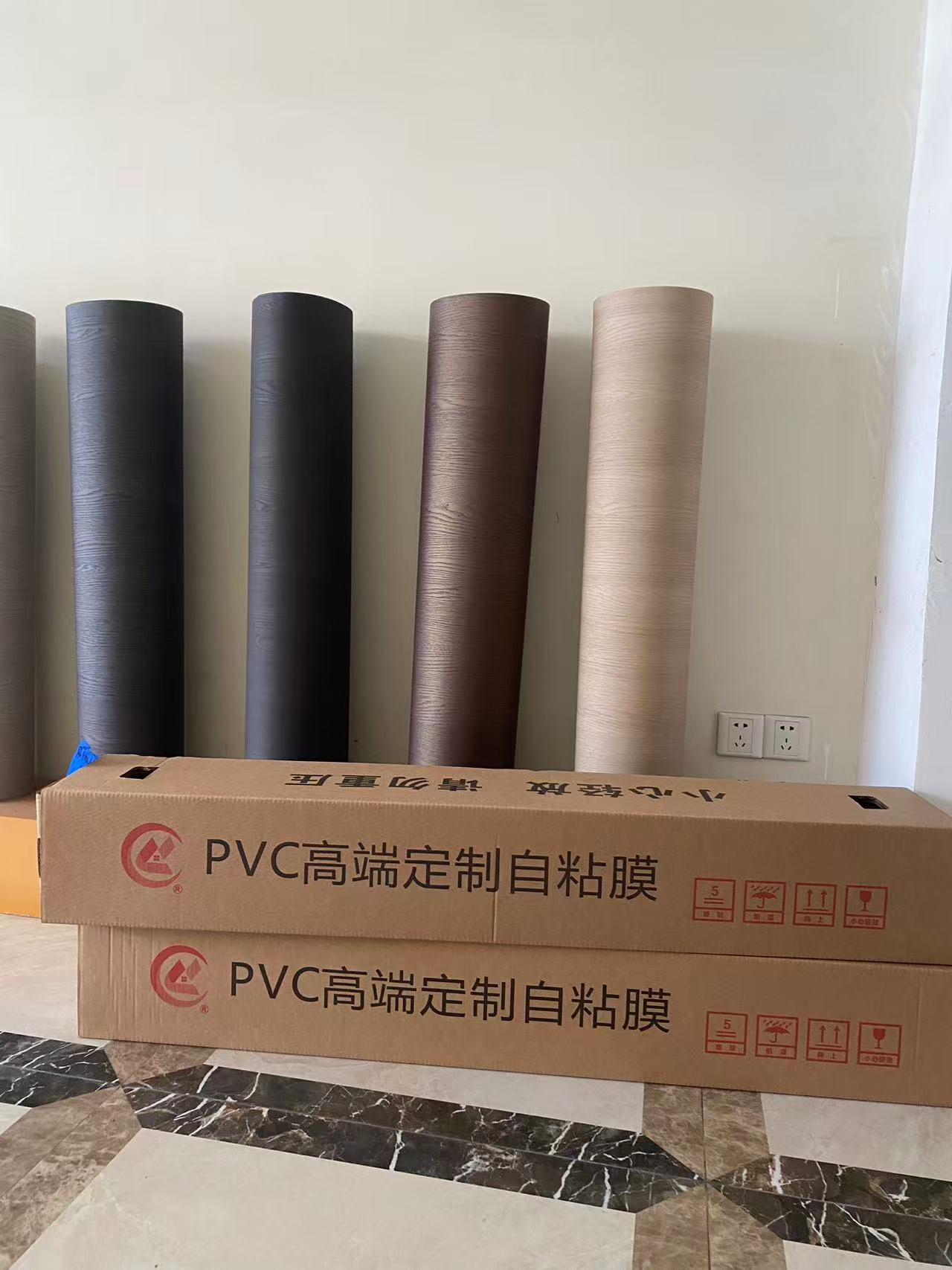
Specifications are easier to trust when they are confirmed on an actual roll. Foshan Nanhai Jiadamei Decoration Material Co., Ltd, producing under the Leiyegaoke brand, supplies sample-based customization and accepts orders from one roll per stock colour, with OEM/ODM options for thickness, width, roll size, adhesive, release paper, labels, cartons and private-label packaging.
Email: office@jiadamei.com | Tel / WhatsApp: +86 13420779866 | Website: www.leiyegaoke.com
Have Questions or Need More Details?
Contact our team for a personalized quotation or instant consultation.
Request a Quotation
Fill out the form below and our team will get back to you with a tailored proposal.
WhatsApp Direct Chat
Prefer to chat in real-time? Message us on WhatsApp for instant assistance & quick answers.
- Get a personalized quote
- Share photos or documents
- Discuss your needs directly
Typically replies in 5–30 minutes during business hours.