Self-Adhesive PVC Film Supplier Audit: Verifying Capability and Delivery Assurance
Direct answer: a self-adhesive PVC film supplier audit verifies two separate promises. Capability means the factory can produce film to a locked specification — PVC base film, water-based acrylic pressure-sensitive adhesive, paper release liner, 0.16 mm thickness, 1,240 mm width and 50 m roll length. Delivery assurance means the factory can repeat that specification on schedule, at your minimum order quantity, in the packaging you specified, with documentation your customs broker and your own customer will accept. Buyers who audit only the first promise usually discover the second one during the first production order.
This guide is written for importers, distributors, renovation material suppliers and project buyers who are already evaluating suppliers and are close to placing an order. It converts a vague “factory visit” into a structured checklist with evidence, pass signals and specific questions, using the specification and commercial terms of a real self-adhesive PVC decorative film programme.
Why Supplier Audits Fail Before They Start
Most audits fail because they test the sample instead of the system that produced it. A sample roll is often produced under close attention and manually inspected; a production order is produced under schedule pressure and packed in volume. The audit has to move the buyer from “this sample looks right” to “this production system can repeat it”.
Failure mode 1 — sample-to-bulk drift. Thickness, colour tone, gloss level, adhesive coat weight and release-liner behaviour can shift between the approved sample and the bulk rolls. For interior renovation work this surfaces as cabinet doors that do not match across a kitchen, or edges that lift weeks after installation. The remedy is to write the specification into the purchase order and to agree that acceptance is based on the approved sample for appearance, colour, pattern and dimension.
Failure mode 2 — commercial mismatch. A buyer validates a colour and builds a budget around a low entry quantity, then discovers the colour is a custom colour with a materially higher per-colour minimum. Stock colours and custom colours are not priced or scheduled the same way, and an audit that ignores this distinction produces an order that cannot be placed as planned.
Failure mode 3 — documentation gap. A compliance claim without a certificate number, an issuing laboratory, a standard reference and an issue date cannot be verified by your importer, your distributor or your client’s specifier. Testing capability is therefore part of the audit, not a separate paperwork exercise.
What the Decorative Film Supply Base Looks Like in 2026
The global PVC decorative film market was valued at USD 4.8 billion in 2025 and is projected to reach USD 8.6 billion by 2034, according to Dataintelo’s PVC Decorative Film Market Research Report 2034. The same source reports that Asia Pacific held a 42.3% revenue share in 2025, that wood grain remained the largest product segment at 38.4%, and that the furniture sector accounts for approximately 44.6% of global consumption. Those three figures point in one direction: the demand is concentrated in furniture and cabinetry surfaces, and it is concentrated in Asia Pacific supply.
Trade structure matters as much as market size. China became the world’s largest PVC exporter in 2025, accounting for 24% of total global trade volume, according to International Trader Publications (January 2026). Chinese exports under HS 3919 — the heading covering self-adhesive plates, sheets, film, foil, tape and strip of plastics — reached an all-time high of 246.296 RMB million in January 2026, based on General Administration of Customs China data. Self-adhesive PVC decorative film classified under HS 39199090 sits inside that flow.
The practical consequence for buyers is that the supply base is deep but not uniform. Large integrated producers, coating specialists, converters and trading intermediaries can all quote the same product description. The audit exists to establish which type of supplier is actually in front of you, and what happens after the deposit is paid.
The Six-Point Supplier Audit Framework
1. Material and Construction Verification
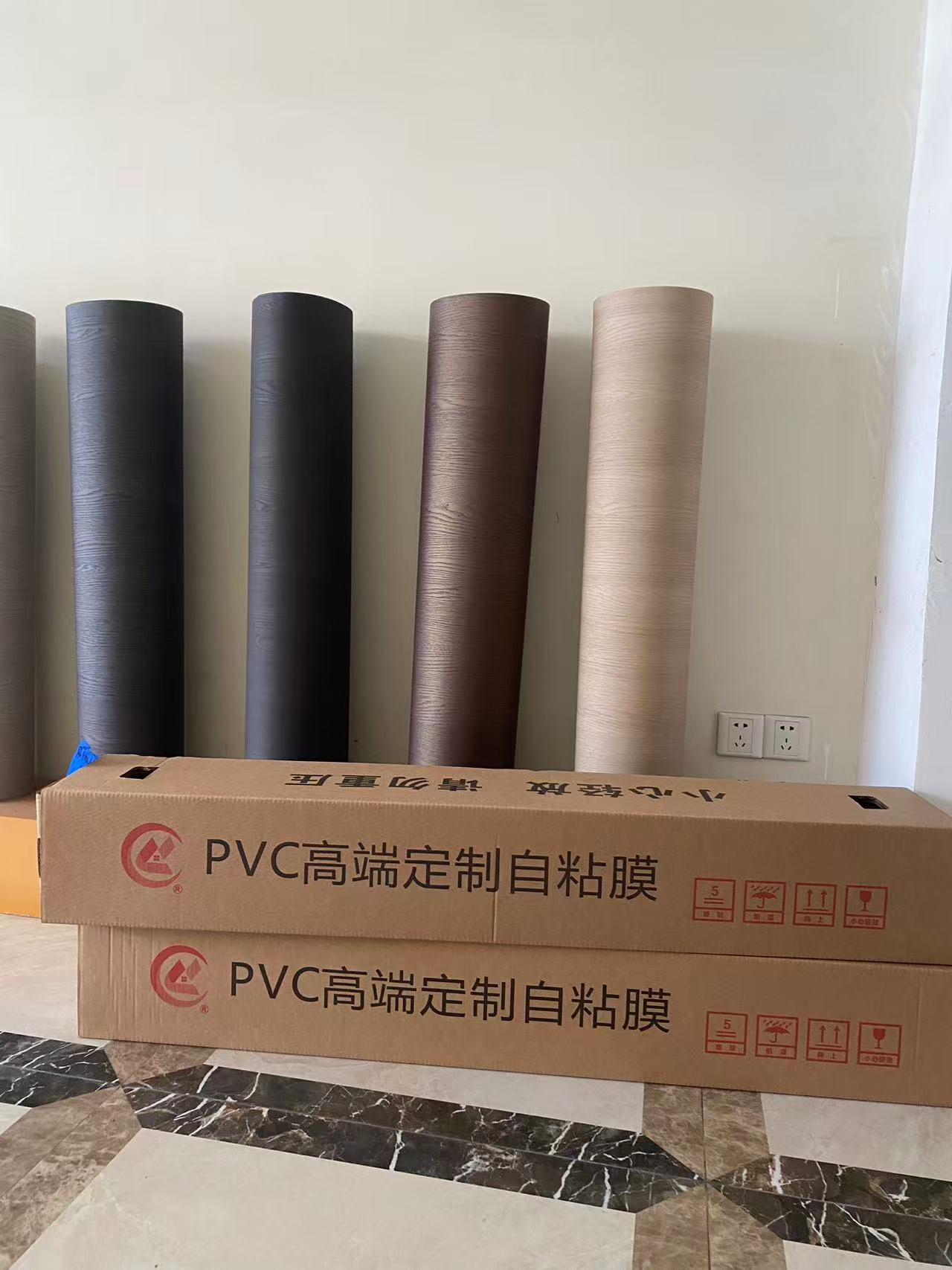
Start with the construction stack, because everything downstream depends on it. A self-adhesive PVC decorative film is built from four elements: the PVC base film, the adhesive, the release liner, and the printed or embossed decorative layer. Ask for the specification in writing and compare it line by line with what the sample label states.
- Base material: PVC (polyvinyl chloride).
- Adhesive: water-based acrylic pressure-sensitive adhesive.
- Release liner: paper release liner.
- Standard dimensions: 0.16 mm thickness, 1,240 mm width, 50 m roll length.
- Surface finish: matte, glossy, embossed or super matte.
- Installation: peel and stick, indoor surface application.
Two questions separate a serious producer from a reseller. First: “Does the adhesive strength change per application, and can you supply it consistently at the coat weight used for my sample?” Second: “Which test method do you use to characterise the base film?” For nonrigid vinyl chloride film and sheeting, ASTM D1593 is the standard specification used to evaluate tensile strength and elongation, and a producer who can reference the method is easier to hold to a repeatable result than one who answers only with adjectives.
2. Model Line and Pattern Coverage
Audit the range, not just the one colour you intend to buy first. A supplier whose pattern library cannot be extended after the first order creates a dead end for your next project, and a supplier whose lines are not separated by construction or finish creates confusion in sampling, quality control and reordering.
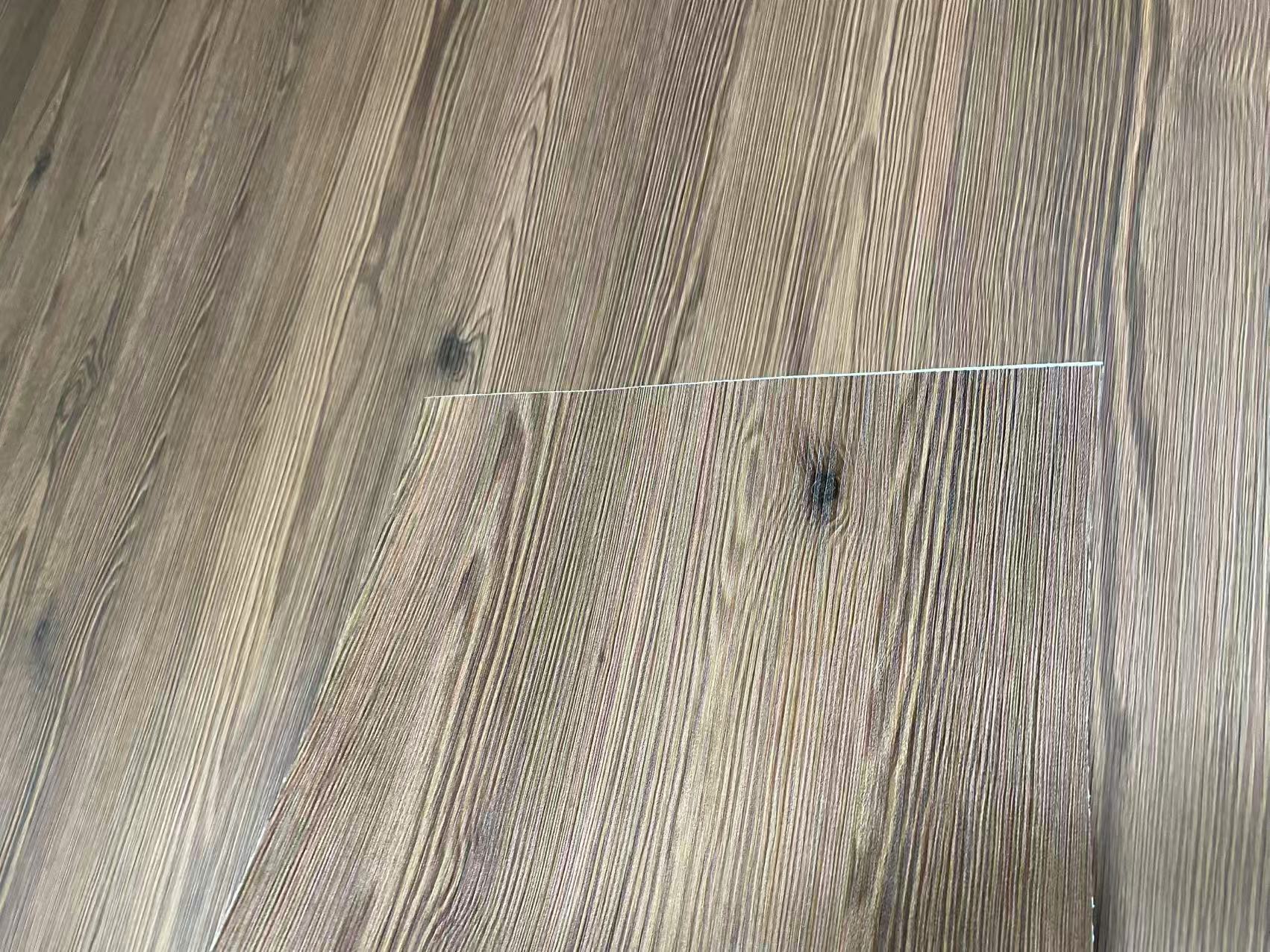
In a mature programme the range is organised into distinct lines. LY1804–LY1869 covers a broad self-adhesive decorative range across wood grain, marble, solid colour, stone, metallic, textile and concrete patterns. LF6801–LF6830 is focused on marble grain and marble effect finishes. LG7801–LG7836 is a Japanese-style wood grain line offered in matte and super matte finishes. Each line shares the same underlying construction, which is what allows a distributor to stock several finishes without maintaining three separate specifications.
3. OEM and ODM Scope Verification
For buyers building a private label or a market-specific design programme, the OEM and ODM scope is the core of the capability audit. The manufacturer provides OEM and ODM production services, and the auditable question is how far that scope extends in writing.
The scope should be itemised, not summarised. Verified OEM and ODM categories include custom colours, custom patterns, sample-based customization, custom sizes, custom thickness, surface finish customization, custom logo, custom labels, custom packaging and custom cartons. Each of these items has a different lead time and a different cost driver, so an audit that confirms only “OEM available” leaves the buyer exposed on packaging and labelling, which are usually the last items to be confirmed and the first to delay a shipment.
Ask for the private label chain end to end: who prints the design, who approves the colour match, who produces the carton, who applies the label, and what is checked before the carton is sealed. The answers describe a real customisation capability rather than a sales statement.
4. Compliance Documentation
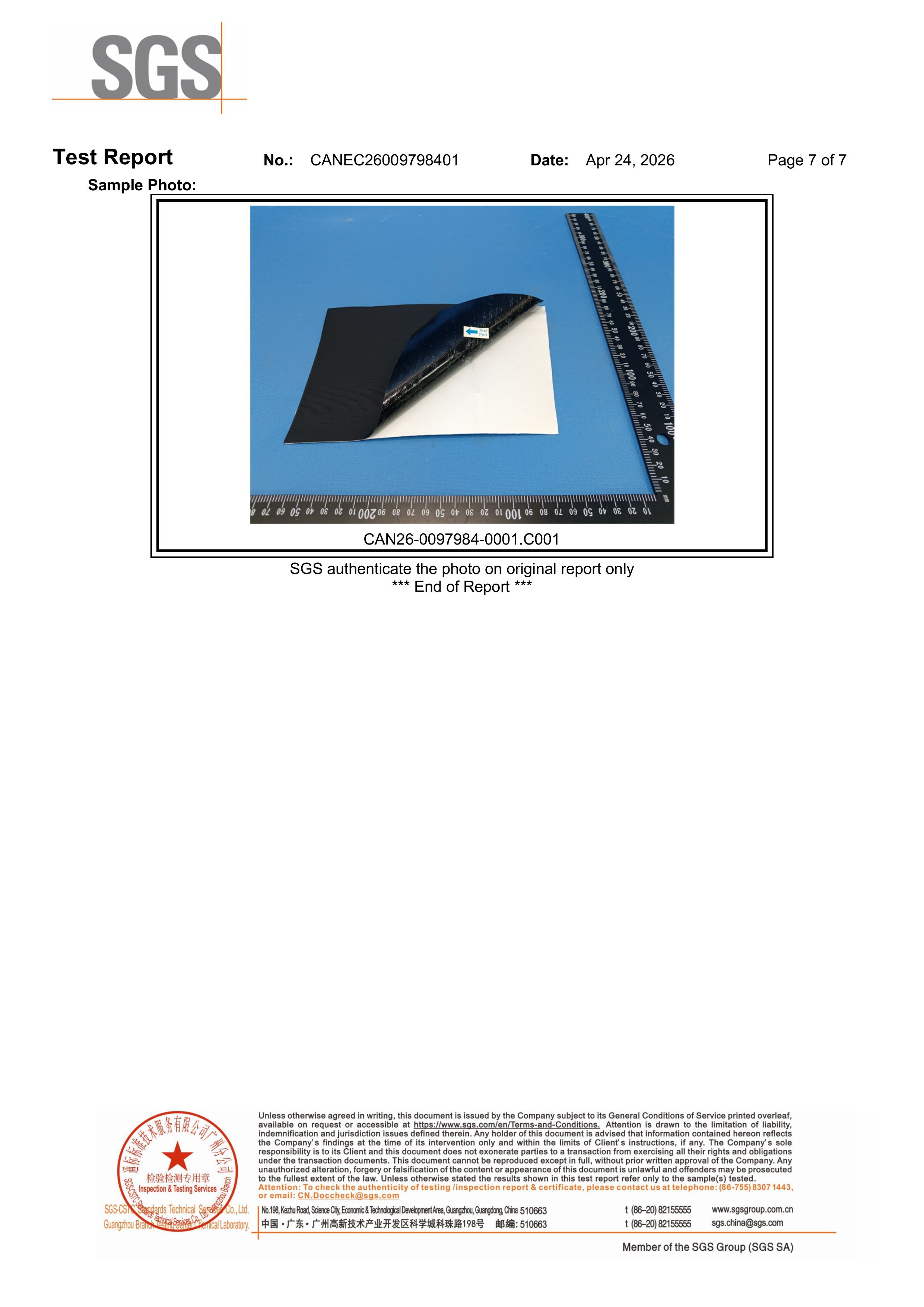
Compliance verification is a document check with four mandatory elements: standard, certificate number, issuing laboratory and issue date. If any element is missing, the claim is not verifiable.
A verifiable example from this programme: a RoHS test report issued under the EU RoHS Directive (EU) 2015/863 amending Annex II to Directive 2011/65/EU, certificate number CANEC26009798401, issued by SGS–CSTC Standards Technical Services Co., Ltd. Guangzhou Branch, with an issue date of 2026-04-24, covering self adhesive PVC decorative film, PVC decorative film and vinyl film, and applying to the LY1804–LY1869, LF6801–LF6830 and LG7801–LG7836 product lines. Separately, the manufacturer’s stated product compliance extends to REACH and RoHS requirements for overseas markets.
Beyond restricted substances, check the project-level requirement. Some commercial interior specifications call for a B1 flame retardant rating (GB 8624) for decorative films, and B1 flame retardant testing and certification is a recognised safety standard for interior decoration. If your project requires it, confirm whether the specific film you are ordering carries that rating rather than assuming it applies to the range. For customs, confirm the export HS code in writing: this product is declared under 39199090.
5. Delivery Assurance and Commercial Terms
Delivery assurance is a scheduling and commitment question. Three numbers decide whether a supplier can support your programme: capacity, lead time and minimum order quantity.
Monthly capacity describes how much production room your order can realistically claim. In this programme the monthly capacity is 120,000 meters, with a stated lead time of 20–25 days under OEM and ODM production. Ask how that lead time behaves when two custom colour orders land in the same week, and whether stock colours are shipped from existing inventory or scheduled into the same queue.
The minimum order quantity is where most first orders are won or lost. Stock colours carry an MOQ of one roll per colour, which allows a distributor or a contractor to trial a finish without committing to volume. Custom colours carry an MOQ of 3,000 meters per colour, because the colour must be matched and run as a dedicated batch. Both figures should appear in the quotation, not in a later conversation.
Confirm the commercial framework as well: payment terms of T/T, and delivery terms available as EXW, FOB, CIF, express and air shipment. Packaging should be specified at the same time — standard packing is one roll per carton, and custom cartons and labels are part of the OEM scope. Export experience is a reasonable proxy for documentation reliability: this manufacturer exports approximately 80% of output and has supplied customers across Europe, the Middle East, Southeast Asia, Russia, Africa and North America.
6. Acceptance Criteria and Roll Consistency
Acceptance criteria should be agreed before production starts, not after the container arrives. The verifiable acceptance framework is straightforward: acceptance by customer or third-party inspection, acceptance based on the approved sample, and inspection of appearance, colour, pattern and dimension. Quality control runs through the process from raw material inspection and colour matching to coating, finished-product inspection and final packing, with 100% testing.
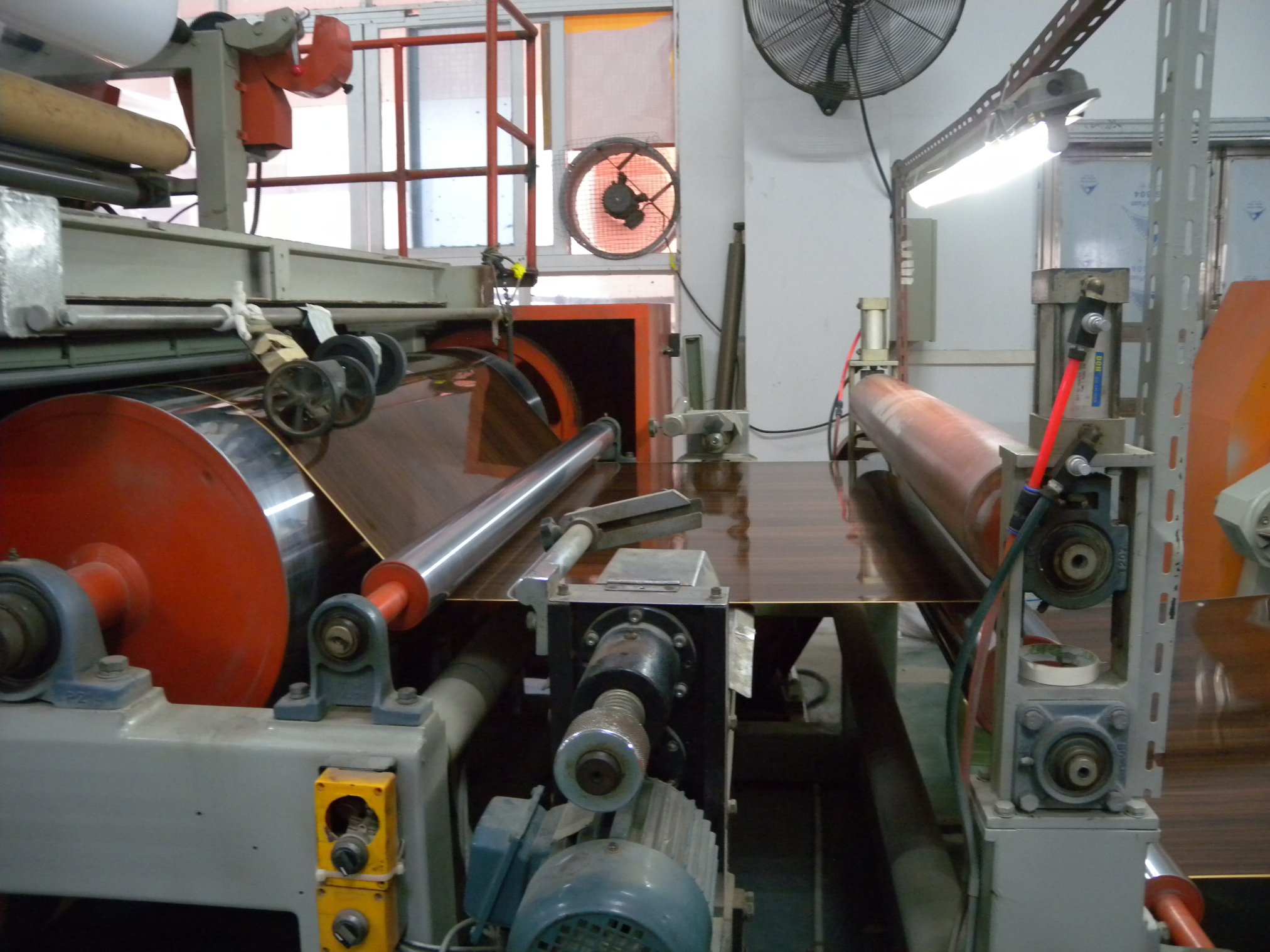
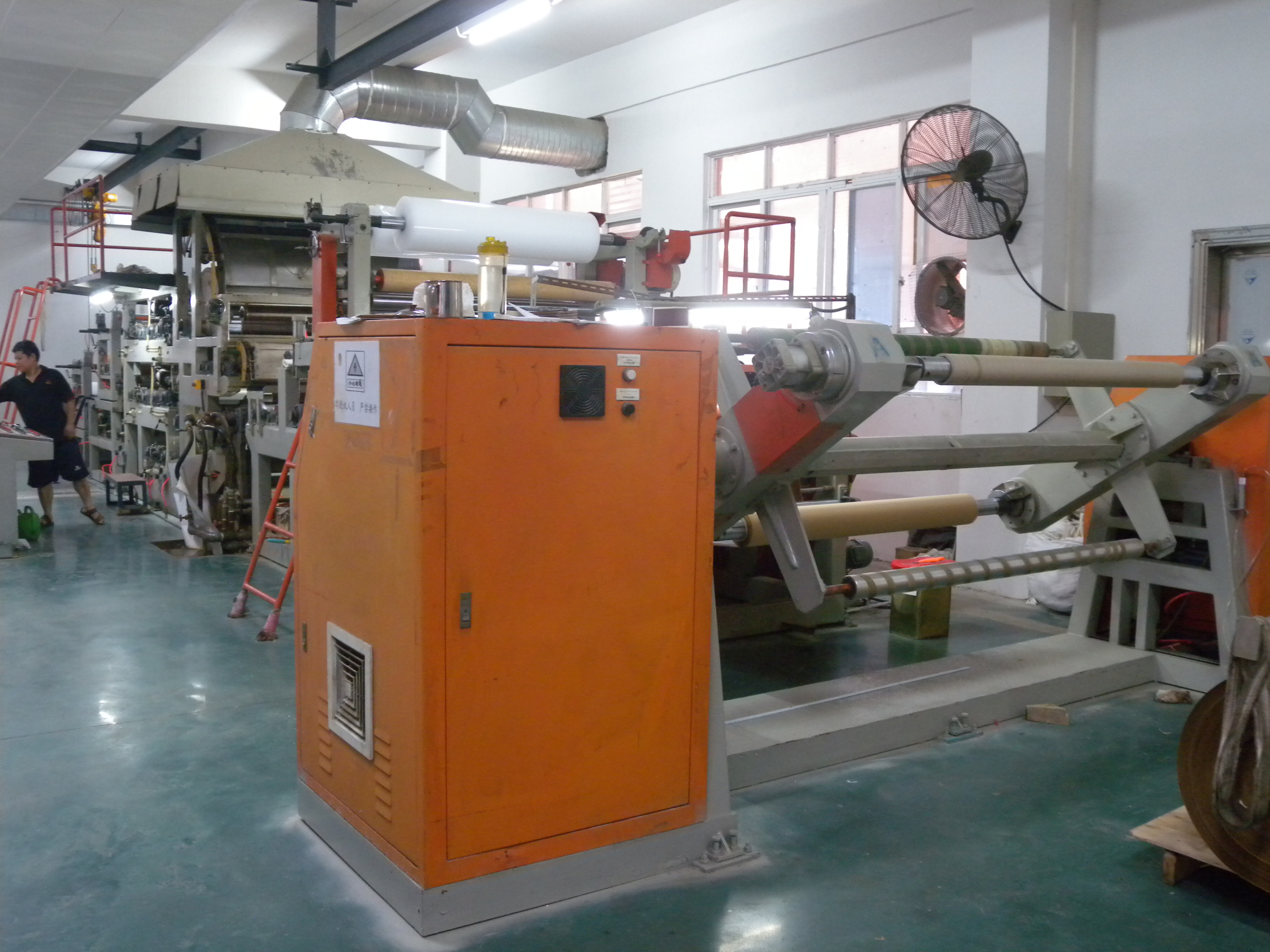
Roll consistency is the part buyers most often under-specify. Check roll-to-roll colour deviation across the shipment, not only against the sample. Check that width and length match the declared 1,240 mm × 50 m. Check that the release liner is uniform and that the film unwinds without adhesive transfer. Check core diameter, edge condition and carton condition. A supplier operating two adhesive coating lines and an integrated production system covering PVC film production, printing, laminating, adhesive coating, slitting, inspection and packaging has fewer handover points where consistency can be lost — but you still have to verify it.
Step-by-Step: Running the Audit Before You Place the Order
Step 1 — Lock the specification sheet. Write down material, adhesive type, release liner, thickness, width, roll length, finish, pattern reference and packaging. Nothing else in the audit is meaningful until this document exists.
Step 2 — Request documents before samples. Ask for the compliance report with certificate number and issuing laboratory, the specification sheet, and the model line list. Suppliers who cannot produce documents quickly usually cannot produce them at shipment time either.
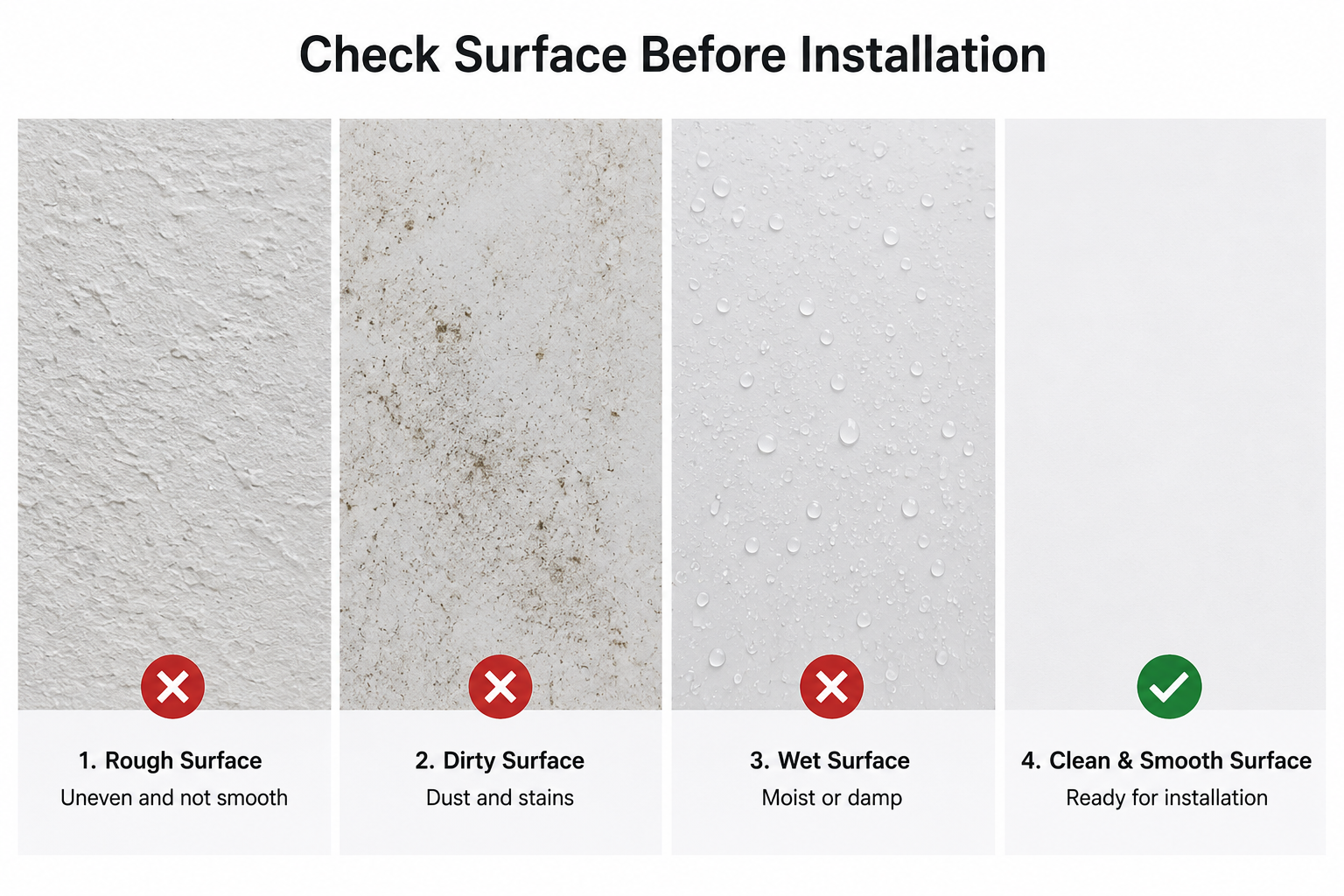
Step 3 — Test the sample as a system. Apply the film to a prepared, smooth, clean, dry substrate. Observe adhesion, edge lift, bubble formation and the behaviour of the release liner during application. Trapped air is the most common installation complaint — when applying, work gradually and use a squeegee to push air out while removing the liner step by step rather than peeling the whole backing at once.
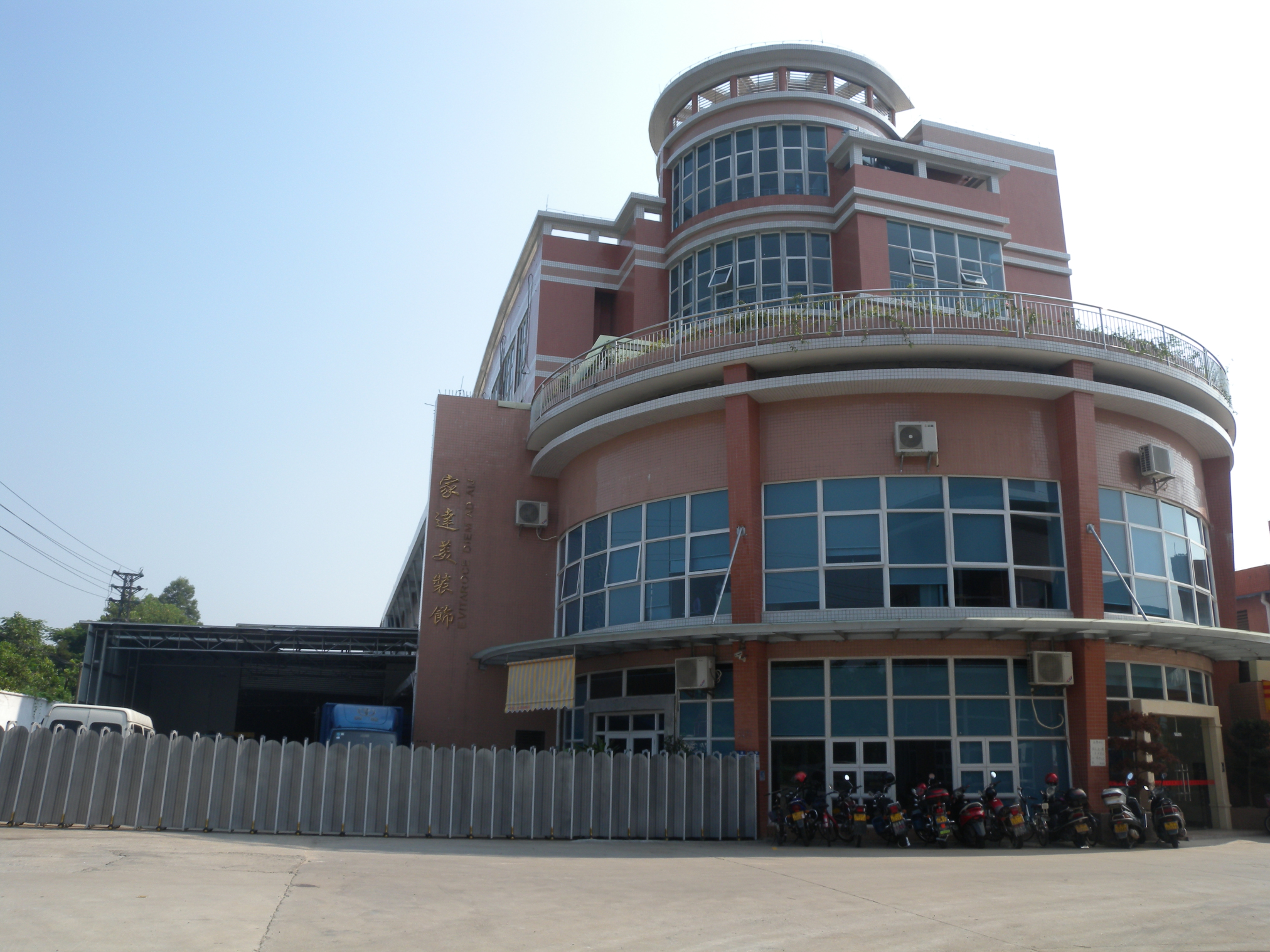
Step 4 — Verify the production footprint. Confirm who owns the coating lines, how many there are, and which steps are in-house. In this programme the facility covers 12,000 m² in Foshan, Guangdong, with two adhesive coating lines, a five-engineer R&D team and an in-house chain from film production to final packing.
Step 5 — Confirm commercial terms in writing. MOQ for stock colours (one roll per colour), MOQ for custom colours (3,000 meters per colour), lead time (20–25 days), payment (T/T), delivery terms (EXW, FOB, CIF, express, air shipment) and HS code (39199090).
Step 6 — Agree acceptance before production. State the inspection basis: customer or third-party inspection, acceptance against the approved sample, and inspection of appearance, colour, pattern and dimension.
Step 7 — Plan the packaging and the handover. Confirm rolls per carton, labelling, carton print, palletisation if required, and who sends the shipping documents. Packaging errors are the most common avoidable delay in first orders.
Use Cases: Where This Audit Changes the Buying Decision
Kitchen cabinet wrapping. Self-adhesive PVC decorative film is suitable for renovating smooth kitchen cabinet doors and interior furniture surfaces, providing a decorative, water-resistant and easy-to-clean finish. The audit focus is surface preparation and adhesion: the film performs best on smooth, clean, dry and stable surfaces such as painted wood, sealed MDF or properly finished panels.
Bathroom and wet-adjacent surfaces. The PVC surface is water-resistant and easy to clean, which suits normal bathroom and kitchen use. However, edges, joints and the underlying substrate should not be continuously exposed to water or excessive moisture. For this application the audit must confirm water-resistant surface behaviour and a clear specification on edge sealing and joint treatment.
Furniture manufacturing and lamination. A furniture manufacturer in Algeria has purchased 100,000 meters per month for more than six years, laminating the film onto MDF board and producing finished cabinet doors. The performance highlights reported by that customer are design and colour quality, water resistance, fire resistance, anti-scratch and oil resistance. For a buyer, the relevant signal is not the headline result but the duration and the repeat volume: six years of monthly purchasing indicates a specification that could be reproduced at industrial scale.
Commercial interior renovation. Hotels, offices and retail interiors typically require third-party inspection, larger volumes and more documentation than residential work. The audit weight shifts to compliance evidence, roll-to-roll consistency and documented acceptance.
Distributor stock programmes. For distributors, the decisive factor is usually the MOQ structure combined with range depth. A one-roll-per-colour entry point on stock colours allows a controlled first shipment, while the custom colour minimum of 3,000 meters per colour defines when a private design programme becomes economical.
Audit Reference Tables
The two tables below summarise what to verify across the model lines and what evidence counts at each audit stage. Both are built from the specification and commercial terms described above.
Table 1 — Model line coverage and shared construction
| Model line | Pattern focus | Shared construction | Typical application |
|---|---|---|---|
| LY1804–LY1869 | Wood grain, marble, solid colour, stone, metallic, textile, concrete | PVC, 0.16 mm, 1,240 mm × 50 m, water-based acrylic pressure-sensitive adhesive, paper release liner | Furniture, cabinets, doors, walls, interior renovation |
| LF6801–LF6830 | Marble grain / marble effect, matte, glossy or textured options | PVC, 0.16 mm, 1,240 mm × 50 m, water-based acrylic pressure-sensitive adhesive, paper release liner | Kitchen cabinets, furniture manufacturing, hotel, office and retail interiors |
| LG7801–LG7836 | Japanese-style wood grain, matte and super matte finishes | PVC, 0.16 mm, 1,240 mm × 50 m, water-based acrylic adhesive, release paper backing | Cabinets, wardrobes, doors, interior renovation |
Table 2 — Audit stage, evidence to request and pass signal
| Audit stage | Evidence to request | Pass signal |
|---|---|---|
| Material and construction | Written specification and roll label showing 0.16 mm, 1,240 mm, 50 m, PVC, acrylic adhesive, paper liner | Label matches the purchase order line by line |
| Range and colour | Model line list and finish options (matte, glossy, embossed, super matte) | The finish you need belongs to a defined line and can be reordered |
| OEM / ODM scope | Itemised customisation list: colours, patterns, sizes, thickness, finish, logo, labels, packaging, cartons | Every customisation item has an owner and a lead time |
| Compliance | Test report with standard, certificate number, issuing laboratory and issue date | RoHS report CANEC26009798401 issued by SGS–CSTC on 2026-04-24 is available on request |
| Capacity and scheduling | Monthly capacity and stated production lead time | 120,000 meters per month capacity with a 20–25 day lead time |
| Commercial terms | MOQ per colour, payment terms, delivery terms, HS code | 1 roll per colour for stock colours, 3,000 meters per colour for custom colours, T/T, EXW/FOB/CIF, HS 39199090 |
| Acceptance | Agreed inspection basis and defect criteria | Customer or third-party inspection against approved sample for appearance, colour, pattern and dimension |
Frequently Asked Questions
What compliance documentation should a self-adhesive PVC film supplier provide?
A supplier should provide a test report that names the standard, the certificate number, the issuing laboratory and the issue date. In this programme the relevant RoHS report was issued under the EU RoHS Directive (EU) 2015/863 amending Annex II to Directive 2011/65/EU, certificate number CANEC26009798401, by SGS–CSTC Standards Technical Services Co., Ltd. Guangzhou Branch, on 2026-04-24, covering self adhesive PVC decorative film, PVC decorative film and vinyl film across the LY1804–LY1869, LF6801–LF6830 and LG7801–LG7836 lines, with stated REACH and RoHS compliance for overseas markets. The film is declared in export under HS code 39199090. If a project specifies a B1 flame retardant rating (GB 8624), confirm that rating for the specific film being ordered, because a project-level requirement is not automatically covered by a material-level report.
What OEM and ODM capability should be verified before ordering?
Verify the customisation list as separate items rather than as a single statement. The manufacturer provides OEM and ODM production services covering custom colours, custom patterns, sample-based customization, custom sizes, custom thickness, surface finish customization, custom logo, custom labels, custom packaging and custom cartons. The audit should establish who owns each step and how long it takes, because packaging and labelling are frequently the last items confirmed and the most common cause of dispatch delays. A producer with in-house control of film production, printing, laminating, adhesive coating, slitting, inspection and packaging has fewer handover points than a supplier assembling those steps from third parties.
What does the minimum order quantity look like, and what drives the cost difference?
There are two MOQ tiers. Stock colours start at one roll per colour, which allows a distributor, contractor or specifier to test a finish in a real project before committing to volume. Custom colours start at 3,000 meters per colour, because a custom colour must be matched and produced as a dedicated batch. Standard packing is one roll per carton, payment terms are T/T, and delivery terms are available as EXW, FOB, CIF, express or air shipment. Cost differences between the two tiers come from colour matching, batch setup and dedicated production time rather than from the film construction itself.
How is a sample validated, and what acceptance criteria apply?
Samples should be validated on a prepared substrate that matches the real project surface. Self-adhesive PVC decorative film performs best on smooth, clean, dry and stable surfaces such as painted wood, sealed MDF, metal or properly finished panels; rough, dusty, oily, damp or porous surfaces reduce adhesion and affect the final appearance. Acceptance criteria are then set against that approved sample: acceptance by customer or third-party inspection, acceptance based on the approved sample, and inspection of appearance, colour, pattern and dimension. For installation, applying the film gradually with a squeegee while removing the release liner step by step reduces trapped air and helps achieve a smoother result.
What lead time and delivery assurance should buyers expect?
A realistic baseline for OEM and ODM production in this programme is a 20–25 day lead time against a monthly capacity of 120,000 meters, with standard packing of one roll per carton. Delivery assurance comes from three habits: confirming whether your colour is a stock colour or a custom colour, agreeing acceptance criteria before production starts, and locking packaging at the same time as the specification. Buyers who want to verify these terms against a live quotation can request a sample roll and a written quotation from Leiyegaoke (Foshan Nanhai Jiadamei Decoration Material Co., Ltd), which has manufactured self-adhesive PVC decorative film since 2001 and supplies customers across Europe, the Middle East, Southeast Asia, Russia, Africa and North America.
Conclusion: An Audit Is a Set of Written Commitments
A self-adhesive PVC film supplier audit does not need to be complicated, but it does need to be documented. Capability is verified by the specification sheet, the model line structure and the OEM scope. Delivery assurance is verified by capacity, lead time, MOQ tiers, packaging and acceptance criteria. Compliance is verified by a certificate number, an issuing laboratory and an issue date. When all four are in writing before the deposit is paid, the risk in a first order drops sharply — and the second order becomes a repeat rather than a renegotiation.
For buyers working through cabinet, bathroom, furniture and commercial interior renovation programmes, the same framework applies at every volume: confirm the construction, confirm the range can grow with you, confirm the documents, and confirm the terms that determine whether the film actually arrives on the date the project needs it.
Next step for evaluators
Request a specification sheet, a compliance report and a sample roll, then run the seven audit steps against your own project. Contact: office@jiadamei.com | Tel / WhatsApp: +86 13420779866 | More specification and sourcing guides on the Leiyegaoke blog
Have Questions or Need More Details?
Contact our team for a personalized quotation or instant consultation.
Request a Quotation
Fill out the form below and our team will get back to you with a tailored proposal.
WhatsApp Direct Chat
Prefer to chat in real-time? Message us on WhatsApp for instant assistance & quick answers.
- Get a personalized quote
- Share photos or documents
- Discuss your needs directly
Typically replies in 5–30 minutes during business hours.