
Top 5 Self-Adhesive PVC Film Finishes for Interior Walls: A 2026 Ranking
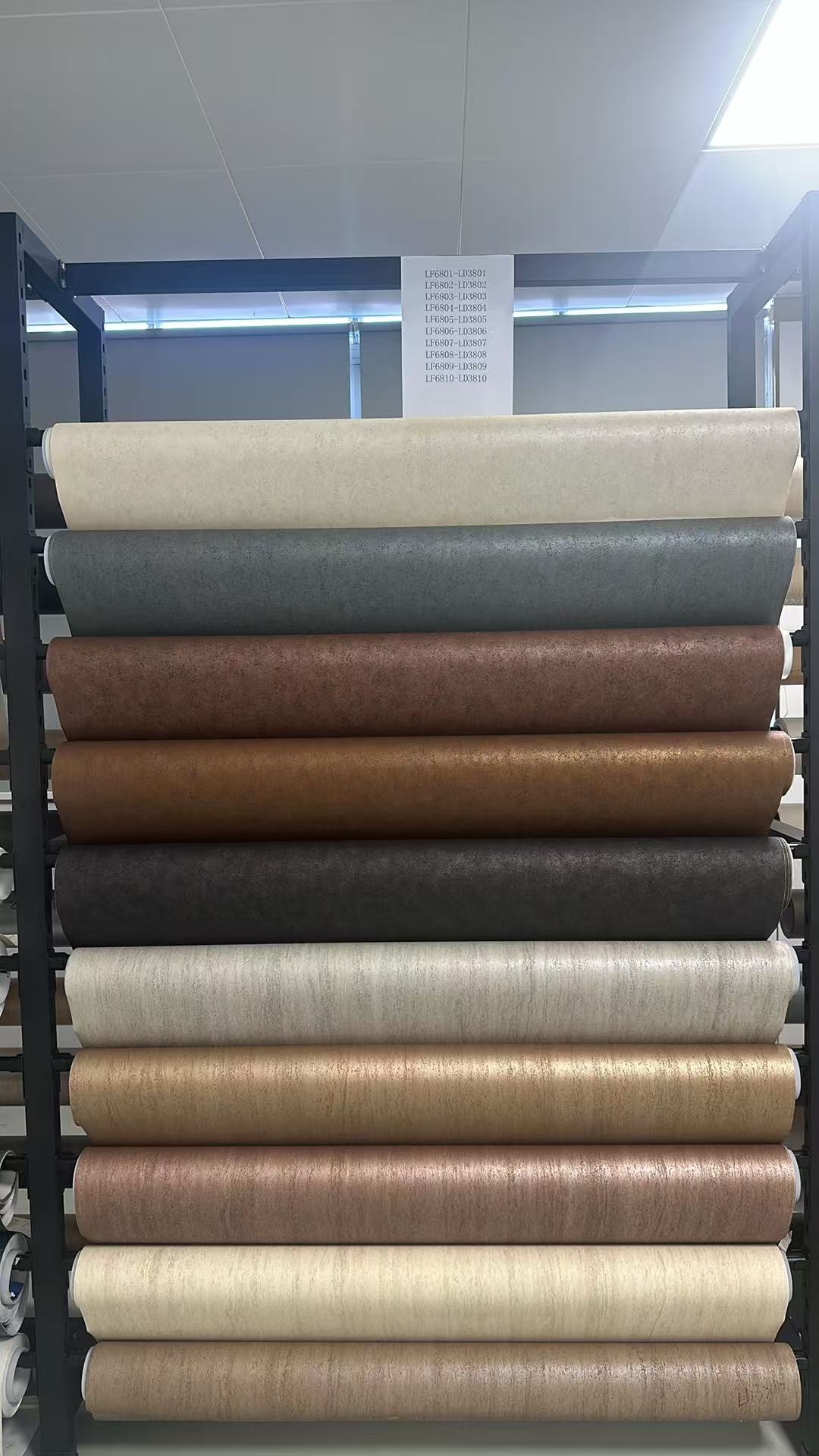
Five finishes cover almost every interior wall brief that uses self-adhesive PVC film: super matte, matte, textured or embossed, glossy, and high gloss. Ranked for wall projects in 2026, super matte leads because large surfaces amplify reflected light, matte follows because it spans the widest pattern range, textured adds physical depth for stone and textile looks, glossy serves marble accent walls and retail interiors, and high gloss delivers the strongest sheen but demands the most controlled substrate.
All five finishes are produced in the self-adhesive PVC decorative film range of Leiyegaoke, the brand of FOSHAN NANHAI JIADAMEI DECORATION MATERIAL CO.LTD — a manufacturer of self-adhesive PVC decorative films established in 2001 and based in Foshan, Guangdong, China. The standard construction across the range is PVC at 0.16 mm thickness, 1,240 mm roll width and 50 m roll length, coated with a water-based acrylic pressure-sensitive adhesive over a release paper backing and installed by peel and stick.
This ranking is written for importers, distributors, renovation contractors and facility teams who have to lock a finish before they lock a pattern. It separates finish from pattern, ranks the five options against wall-specific criteria, gives the roll dimensions needed for coverage planning, and explains why marble grain film is treated as a paid alternative to real marble on accent walls.
Problem Definition: The Finish Decides More Than the Pattern
Finish and pattern are two separate specifications, and usually only one of them reaches the purchase order.
Pattern is the printed design carried by the film: wood grain, marble, solid color, stone, metallic, textile or concrete. Finish is how the surface of that film is treated: matte, super matte, embossed or textured, glossy, or high gloss. Two rolls printed with the same marble design but finished differently will look like different products once they are on a wall, because the finish governs how light leaves the surface.
On a cabinet door, a small sheen difference is easy to accept. On a wall it is not. Wall panels are large, they are normally viewed at an angle to a window or a ceiling light, and several panels are seen together in the same field of view. A high-gloss panel on a three-metre wall reflects window frames and lighting; a matte panel on the same wall shows the printed design with far less of that reflection.
The second risk is inconsistency inside one room. Wall film, cabinet wrap, door film and furniture film are frequently specified at different stages of a project, and a finish that is left unspoken is a finish that gets chosen by default. Three sheen levels inside one visual field read as three materials rather than one scheme.
Third, finish interacts with substrate quality. A glossier surface makes small substrate irregularities easier to see, so a glossy or high-gloss specification normally carries a stricter surface-preparation requirement than a matte one. That is why finish selection is a substrate decision as much as a design decision.
The ranking below therefore weighs four criteria: behaviour under interior lighting, pattern availability inside the standard range, tolerance of real wall conditions, and maintenance.
Industry Background: A Wood-Grain-Led Decorative Film Market
Decorative film is no longer a niche repair product. According to Dataintelo's PVC Decorative Film Market Research Report 2034, the global PVC decorative film market was valued at USD 4.8 billion in 2025 and is projected to reach USD 8.6 billion by 2034. The same report attributes a 42.3% revenue share in 2025 to Asia Pacific and identifies wood grain as the largest product segment at 38.4% — consistent with the matte and super matte wood grain finishes that dominate furniture, cabinetry and interior panel work.
Demand remains anchored in furniture and cabinetry, which Dataintelo estimates at approximately 44.6% of global PVC decorative film consumption in 2025. Wall and large-surface renovation uses the same film constructions as furniture, so the finish standards developed for cabinet and panel production — controlled thickness, consistent color, reliable adhesive — carry directly into wall projects.
Supply is concentrated in Asia. International Trader Publications reports that China became the world's largest PVC exporter in 2025 with 24% of total global trade volume, and China's exports under HS Code 3919 (self-adhesive plates, sheets, film, foil, tape and strip of plastics) reached an all-time high of RMB 246.296 million in January 2026, according to General Administration of Customs China data published by CEIC. For buyers, that concentration makes supplier selection as important as finish selection.
Compliance expectations have tightened as well. PVC decorative films can be produced to B1 flame-retardant grade under GB 8624, a recognised fire-safety requirement for interior decoration, and ASTM D1593 is the standard specification used to evaluate tensile strength and elongation of nonrigid vinyl chloride film and sheeting. Buyers specifying wall film should confirm which grade and which test documentation applies to the exact finish and pattern they order.
The 2026 Ranking: Top 5 Self-Adhesive PVC Film Finishes for Interior Walls
The order below is an editorial ranking built on the product facts available in the Leiyegaoke range. Rank 1 fits the widest set of real wall conditions; Rank 5 delivers the strongest visual effect but requires the most control.
1. Super Matte — The Most Forgiving Finish on Large Wall Surfaces
Super matte is a very low-sheen surface treatment: light is scattered across the surface instead of being reflected back at the viewer. In the Leiyegaoke range, the LG7801–LG7836 Japanese-style wood grain series is available in matte or super matte finish, and super matte solid color PVC decorative film is also part of the range.
It ranks first for walls because reflection is the variable that most often makes a film wall look temporary. A low-sheen surface keeps a long corridor or a full-height feature wall visually quiet, because reflection does not repeat from panel to panel the way it does on a reflective surface.
What to confirm before ordering: super matte is a finish, not a pattern. The buyer still selects wood grain, solid color or another design, and finish availability differs by design — in the LG7801–LG7836 series the finish is specified as matte or super matte, and the two wording options should not be used interchangeably on an order.
2. Matte — The Broadest Pattern Coverage
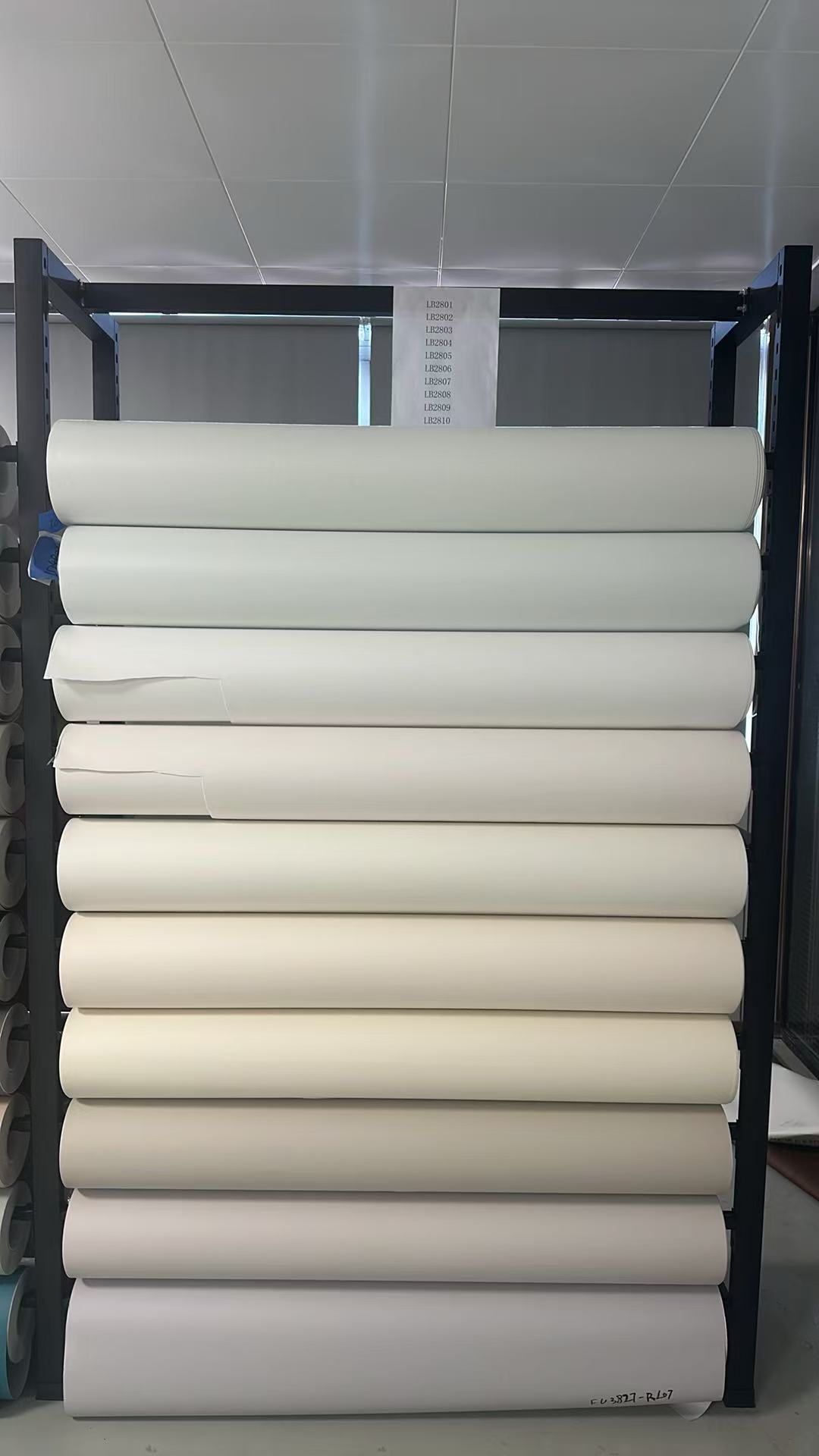
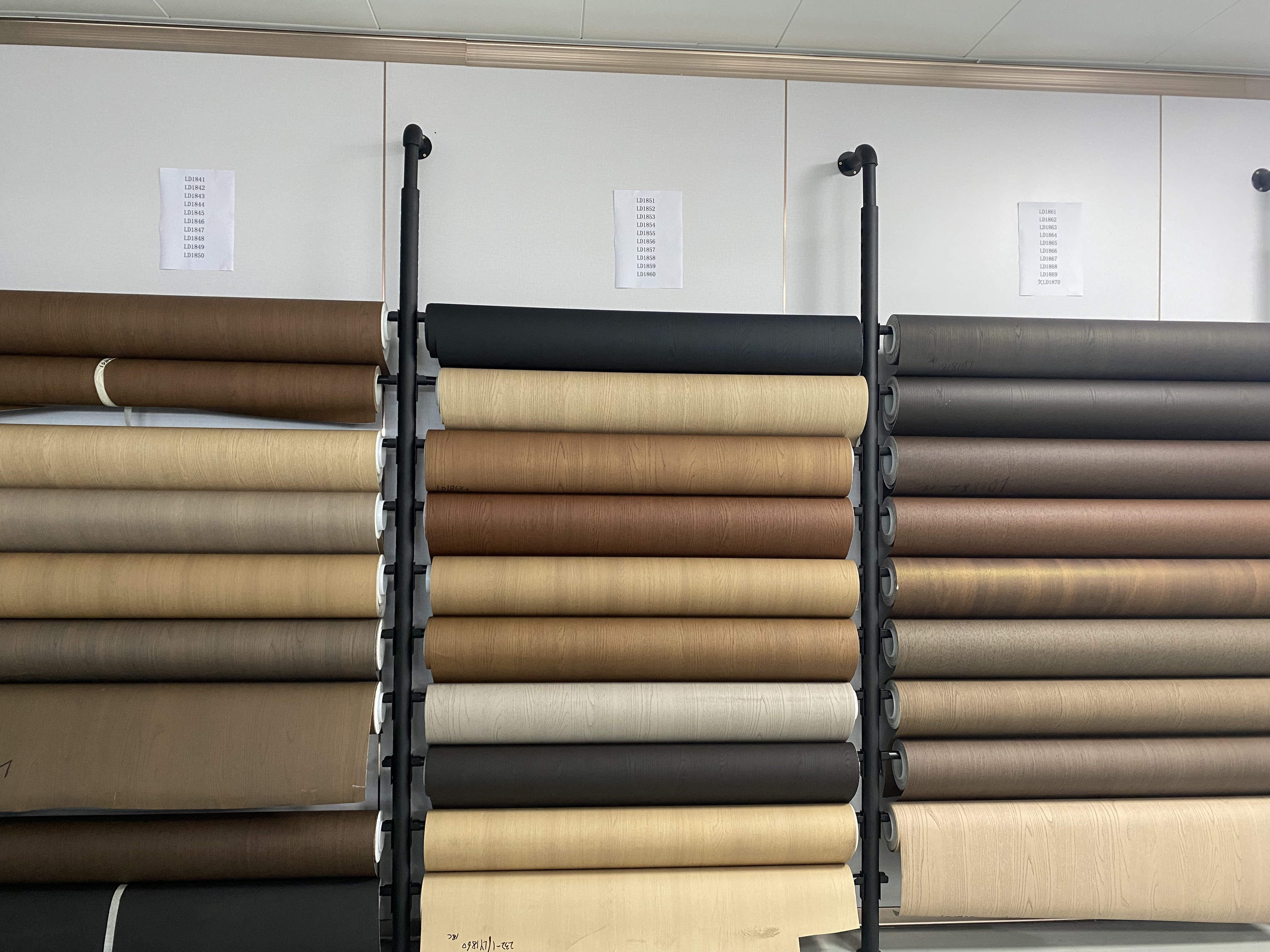
Matte is the finish that most decorative patterns are developed around, and it is the sheen level that spans the widest pattern range in this product family. The LG7801–LG7836 wood grain series is offered in matte; the LF6801–LF6830 marble grain series offers matte, glossy and textured finishes; and the LY1804–LY1869 series covers wood grain, marble, solid color, stone, metallic, textile and concrete patterns in matte, glossy, embossed or super matte finish.
That breadth is the reason matte ranks second rather than lower. A project that needs one continuous finish across wood grain wall panels, solid color storage fronts and marble accents can usually be specified entirely in matte, which keeps a room reading as one scheme instead of several.
Watch-outs: matte reduces reflection but does not conceal poor trimming, so edge quality still depends on installation; and matte and super matte should not be mixed inside one field of view, because the two sheen levels remain visibly different even though both are low-sheen.
3. Textured / Embossed — Physical Depth for Stone, Textile and Concrete Looks
Textured and embossed finishes add a third dimension. Instead of changing only the sheen, the surface carries a physical structure that interacts with light at close range. The LF6801–LF6830 marble grain film offers a textured surface option alongside matte and glossy, and the LY1804–LY1869 series is available in embossed finish across its wood grain, marble, solid color, stone, metallic, textile and concrete patterns.
This finish earns its place on walls where the viewer stands close: hotel corridors, lobby feature panels, reception walls and retail fitting areas, and on stone, textile and concrete designs where the printed look implies a material with real depth.
Watch-outs: a textured surface makes trapped air more visible than a flat one, so bubble-free application matters more, not less. An air-release adhesive structure is designed to let trapped air escape during installation and is generally recommended for furniture renovation, cabinet wrapping and large-area surface applications because it reduces bubbles and wrinkles. Textured specifications should also be matched to viewing distance — deep structure reads well at close range and can look busy across a very large wall.
4. Glossy — The Marble and Retail Finish
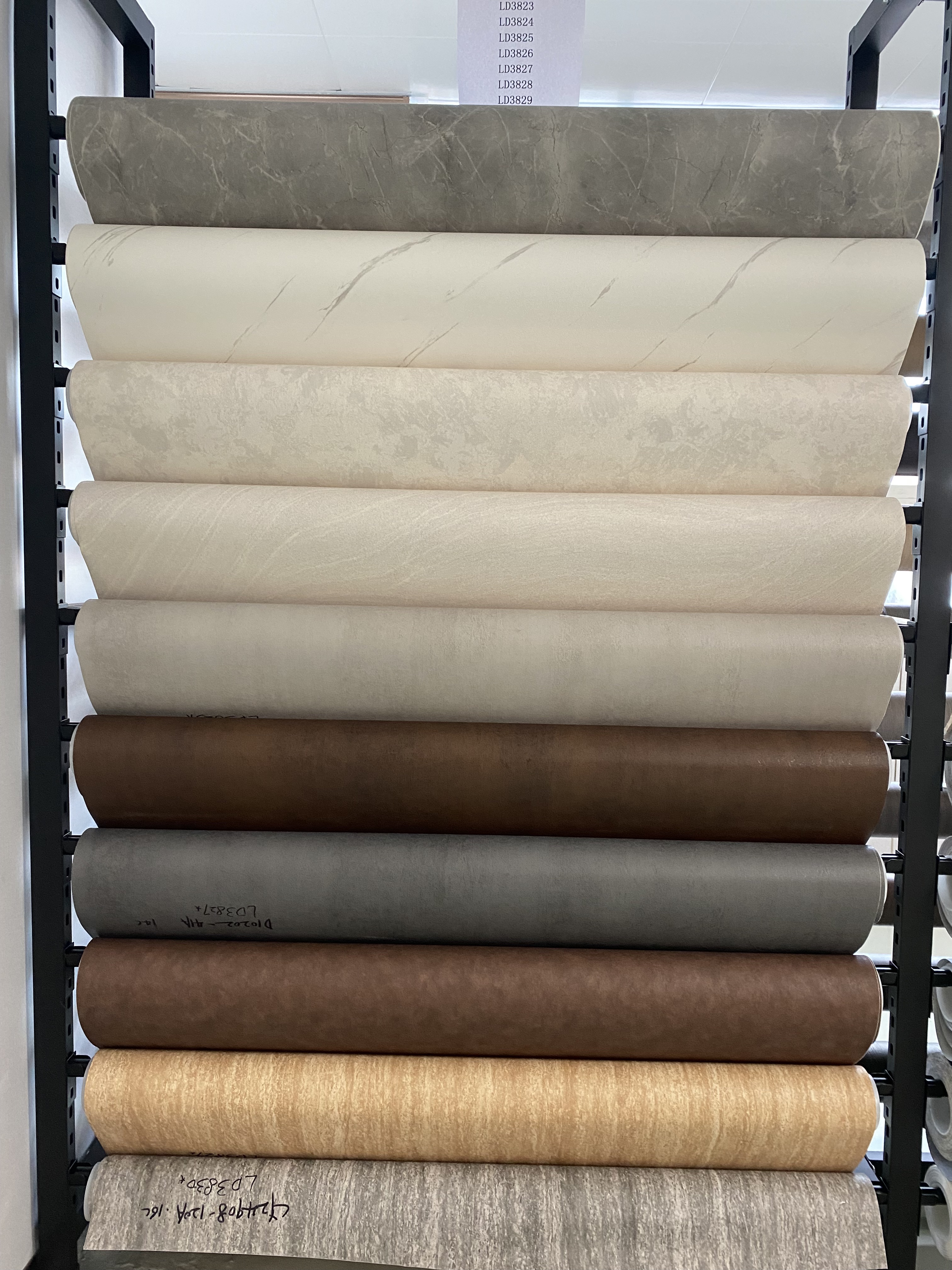
Glossy is a reflective finish that sharpens printed detail. The LF6801–LF6830 marble grain series offers matte, glossy and textured options on the same marble designs, and glossy also appears among the surface finishes of the LY1804–LY1869 series.
Glossy ranks fourth for walls because it is excellent in the right location and demanding everywhere else. On a marble accent wall it strengthens the impression of polished stone; in retail and commercial interiors it produces a clean, bright surface that suits display areas.
Watch-outs: reflective surfaces show substrate unevenness, directional lighting and dust more clearly than low-sheen finishes, so glossy should be specified for controlled walls where the substrate has been checked and prepared first.
5. High Gloss — Maximum Sheen for Feature Walls
High gloss is the highest-sheen option in the range, represented by high gloss solid color PVC decorative film and by the glossy option in the LY1804–LY1869 series. It is ranked fifth not because it performs poorly, but because it is the most specialised choice.
Where high gloss works: single feature walls, retail counters and display backdrops, and commercial interiors where a lacquered or polished look is the design intent. Used in a contained area with good substrate preparation, it delivers a surface that matte and textured films cannot reproduce.
Watch-outs: high gloss depends on the flattest, cleanest substrate and consistent application pressure, and panel-to-panel variation shows quickly once light falls across the surface. For that reason it is usually specified for limited wall areas rather than whole rooms, unless the substrate is fully controlled.
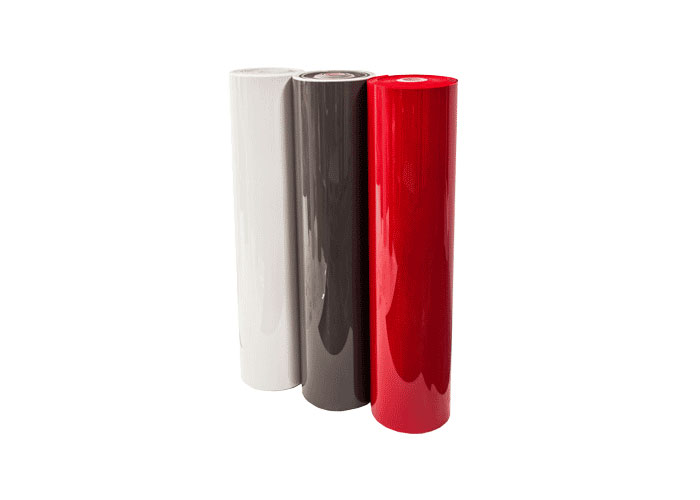
Ranking Snapshot
| Rank | Finish | Surface character | Available in the Leiyegaoke range | Best interior wall use | Main watch-out |
|---|---|---|---|---|---|
| 1 | Super matte | Very low sheen; light is scattered rather than reflected | LG7801–LG7836 Japanese-style wood grain (matte / super matte); super matte solid color film | Full-height feature walls, corridors, hotel rooms, solid color panels | Keep matte and super matte out of the same field of view |
| 2 | Matte | Low sheen with clearly visible printed detail | LG7801–LG7836; LF6801–LF6830 (matte option); LY1804–LY1869 | Whole-room schemes mixing wood grain, marble and solid color | Does not conceal poor edge trimming |
| 3 | Textured / embossed | Physical surface structure on top of the sheen level | LF6801–LF6830 (textured option); LY1804–LY1869 (embossed) | Stone, textile and concrete designs viewed at close range | Needs bubble-free application and the right viewing distance |
| 4 | Glossy | Reflective surface that sharpens pattern detail | LF6801–LF6830 (glossy option); LY1804–LY1869 | Marble accent walls, retail and commercial interiors | Shows substrate unevenness and directional lighting |
| 5 | High gloss | Maximum sheen; closest to a lacquered or polished surface | High gloss solid color PVC decorative film; LY1804–LY1869 (glossy finish) | Single feature walls, counters and display backdrops | Requires the flattest, cleanest substrate |
Marble Grain Film as a Paid Alternative to Real Marble on Accent Walls
Marble grain PVC decorative film (LF6801–LF6830) is described by its manufacturer as offering a realistic marble appearance and as a cost-effective alternative to real marble. That is the commercial logic behind accent walls: the buyer still pays for a material and still pays for installation, but the transaction is a 1,240 mm × 50 m roll of 0.16 mm film rather than cut stone.
Three product facts make that substitution practical on a wall. First, installation is peel and stick with no additional glue required, so the film can be applied to a prepared flat surface without the wet trades that stone usually involves. Second, the surface is waterproof, flexible, easy to cut, easy to clean and easy to maintain, which suits large-surface application. Third, the same marble designs are supplied in matte, glossy and textured finishes, so a designer can use a reflective marble look on one wall and a quieter sheen on adjacent surfaces without changing materials.
Where marble grain film is the better answer: accent walls, feature panels, reception backs, splash areas and hotel room walls — any project where a full marble slab would be disproportionate in cost, weight or delivery complexity. Where it is not the answer: surfaces that stay continuously wet or take heavy abrasion. The film is water-resistant and easy to clean, but edges, joints and the substrate beneath should not be permanently exposed to water or excessive moisture, and the film is recommended for smooth, clean, dry and stable substrates rather than rough or damp surfaces.
For buyers, the decision rule is simple: use marble grain film when the marble effect is a visual statement on a defined wall area, and use solid color or wood grain film when the goal is a uniform background across a large interior.
Step-by-Step Breakdown: Specifying and Installing Wall Film
- Confirm the finish before the pattern. Decide super matte, matte, textured, glossy or high gloss first, then select a wood grain, marble, solid color or other design that is available in that finish. Because finish availability differs by design, this order prevents rework later in the project.
- Measure the wall and calculate rolls. Standard rolls are 1,240 mm wide and 50 m long. Multiply width by length for theoretical coverage — about 62 m² per roll — then add allowance for overlap, pattern matching and edge trimming.
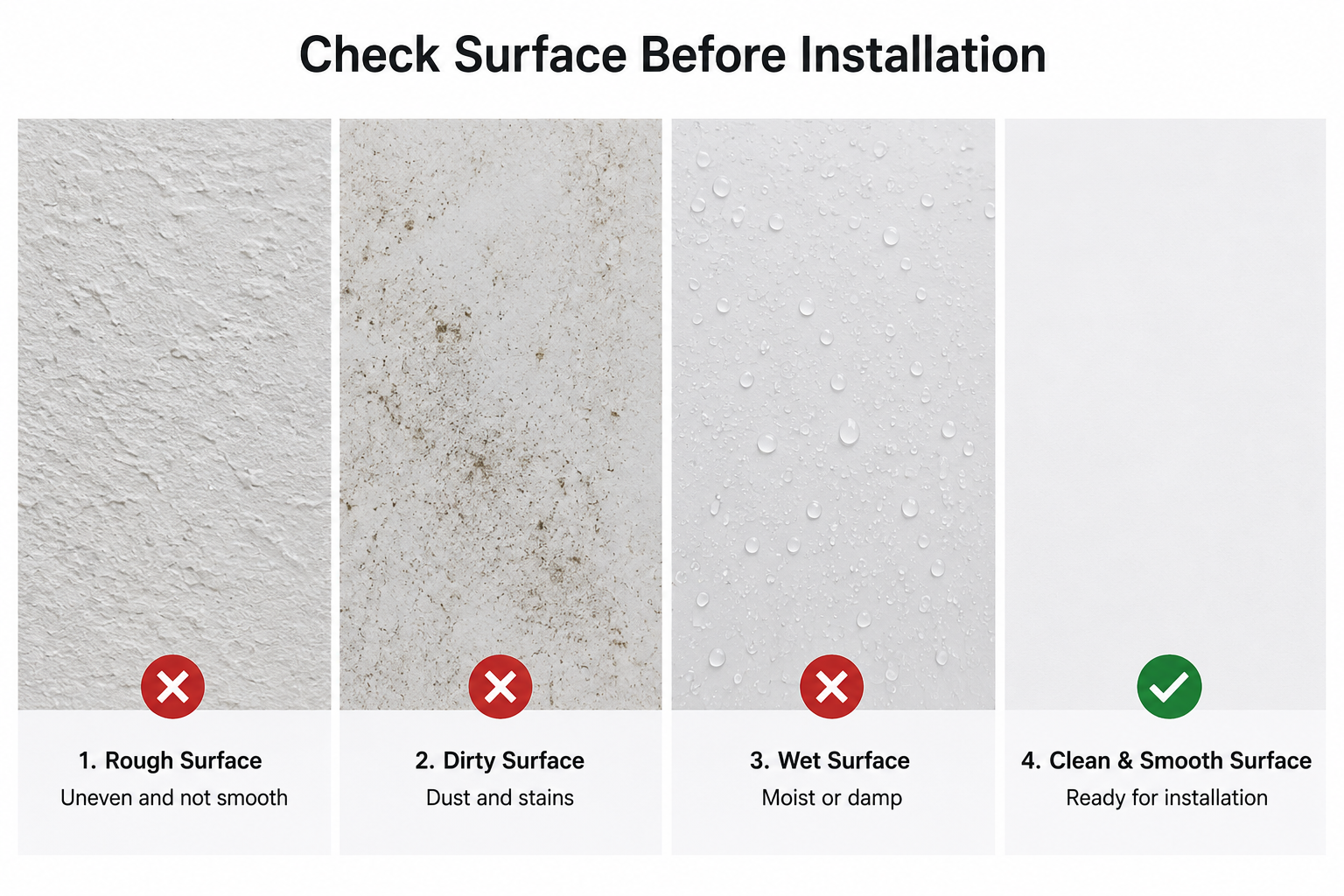
- Verify the substrate. The film is recommended for smooth, clean, dry and stable surfaces such as properly finished panels, sealed MDF, metal and glass. Rough, dusty, oily, damp or unstable surfaces may reduce adhesion and cause bubbling, edge lifting, peeling or an uneven appearance.
- Prepare the surface. Clean and dry the area thoroughly, remove dust, oil, moisture and loose material, and test a small area first when the substrate is uncertain. Rough or porous surfaces may require surface treatment before installation.
- Assemble the standard tool set. A utility knife, squeegee, heat gun, measuring tape, ruler, surface cleaning tools, edge trimming tools and an application roller cover most wall and panel installations.
- Apply in sections and push the air out. Remove the release liner progressively and work trapped air towards the nearest edge with the squeegee as you go. For large panels and for textured or embossed finishes, an air-release adhesive structure reduces bubbles and wrinkles; the film is also flexible enough for installation on curved surfaces.
- Trim, then clean. Cut the edges after the film is seated and use a heat gun where the film has to follow a curve. For routine cleaning, wipe with a soft cloth and water or a mild neutral detergent, and test unfamiliar cleaning products on a hidden area first.
Use Cases: Where Each Finish Earns Its Place
- Residential accent walls: super matte or matte wood grain film for full-height walls; marble grain film in glossy or textured finish for a single feature wall behind a sofa, bed or media unit.
- Hotel and hospitality interiors: textured marble or stone designs in corridors and lobbies, where close viewing rewards surface depth; super matte solid color film in guest rooms, where reflected light is distracting.
- Retail store decoration: glossy and high gloss solid color film for display areas and counters, with matte wood grain panels for fixtures.
- Office renovation: matte or super matte solid color film for brand-consistent reception and meeting room walls, using the same finish on doors and cabinets for continuity.
- Bathroom and wet-area wall surfaces: waterproof marble grain or solid color film on splash zones and vanity walls, with edges and joints kept away from continuous water exposure.
- Cabinet wrap and furniture renovation in the same room: cabinet wrap PVC film and furniture renovation PVC film specified in the same finish as the wall, so the room reads as one material scheme rather than three.
- Elevator, door and panel refurbishment: a scratch-resistant, water-resistant and easy-to-clean surface in matte or super matte finish for high-touch vertical surfaces.
Coverage Planning: Standard Roll Dimensions
| Specification | Value | Why it matters for wall planning |
|---|---|---|
| Material | PVC (Polyvinyl Chloride) | Base material for all five finishes listed above |
| Thickness | 0.16 mm | Standard across the LG7801–LG7836, LF6801–LF6830 and LY1804–LY1869 series |
| Roll width | 1,240 mm | Sets the maximum panel width per vertical drop |
| Roll length | 50 m per roll | Sets the linear metres available in each order unit |
| Theoretical coverage | About 62 m² per roll | 1.24 m × 50 m, before overlap, pattern matching and trimming |
| Adhesive | Water-based acrylic pressure-sensitive adhesive | Peel-and-stick installation, no additional glue required |
| Backing | Release paper | Protects the adhesive and allows progressive application |
| Minimum order | 1 roll per color | Allows small wall projects and sample-area tests |
| Packing | 1 roll per carton | Simplifies handling and stock counting |
| HS code | 39199090 | Customs classification for self-adhesive plastic film |
FAQ: Self-Adhesive PVC Film Finishes for Interior Walls
Are self-adhesive PVC decorative films compliant with fire and material requirements for interior walls?
Compliance is decided by the grade ordered rather than by the film category. PVC decorative films can be produced to B1 flame-retardant grade under GB 8624, a recognised fire-safety requirement for interior decoration in China and in various international projects, and ASTM D1593 is the standard specification used to evaluate tensile strength and elongation of nonrigid vinyl chloride film and sheeting. Leiyegaoke states that its products comply with relevant international requirements including REACH and RoHS, and the company supplies customers in Europe, South America, the Middle East and CIS countries. For a specific wall project, confirm the fire grade and the material documents that apply to the exact finish and pattern ordered, and keep those documents with the project file.
Can self-adhesive PVC film be applied directly to interior walls, and which surfaces are suitable?
Yes — the film is designed for indoor decorative surface renovation and is installed by peel and stick. It is recommended for smooth, clean, dry and stable surfaces such as properly finished furniture panels, sealed MDF, metal, glass and other prepared interior surfaces. Rough, dusty, oily, damp or unstable surfaces may reduce adhesion and cause bubbling, edge lifting, peeling or an uneven appearance. Clean and dry the surface, remove dust, oil, moisture and loose material, and test a small area first when the substrate is uncertain.
How many rolls of self-adhesive PVC film does an interior wall project need?
One standard roll measures 1,240 mm wide by 50 m long, which is about 62 m² of film before overlap, pattern matching and trimming. A single accent wall therefore consumes only part of one roll: for a 3.0 m × 2.7 m wall, three drops of 1.24 m cover the width and roughly 9–10 linear metres are used, leaving the rest of the roll for other surfaces in the same color. Minimum order quantity is 1 roll per color and rolls are packed 1 roll per carton, so small wall projects can be supplied without opening a large stock position.
Can a finish be checked before a production order is placed?
Yes — sampling is part of the normal process, and Leiyegaoke supports OEM and ODM work including customized colors, patterns, thicknesses, roll sizes, adhesives, release papers, labels, cartons and private-label packaging. A physical sample matters most for the finish rather than the pattern: matte, super matte, glossy, textured and embossed surfaces respond differently to a project's own lighting, and a printed catalogue cannot show that difference. Test the sample on a prepared panel under the project's lighting before approving the specification for the full wall.
How are lead time and consistency controlled on larger wall film orders?
Leiyegaoke operates an integrated production system covering PVC film production, printing, laminating, adhesive coating, slitting, inspection and packaging, with two adhesive coating lines and an annual capacity of 15,000,000 meters of self-adhesive PVC decorative film. Keeping those steps inside one system is what allows thickness, color consistency, adhesive performance and production lead time to be controlled together rather than across separate suppliers. For a schedule-critical wall project, confirm the production slot, the inspection points and the packing and documentation requirements — the export HS code is 39199090 — before the order is released. Finish samples, roll specifications and quotations can be requested directly from Leiyegaoke at office@jiadamei.com, on WhatsApp or phone at +86 13420779866, or through www.leiyegaoke.com.
Conclusion: Choose the Sheen, Then the Pattern
For interior walls in 2026, the finish is the specification that decides whether the result reads as a designed surface or a temporary covering. Super matte leads the ranking for large, light-exposed walls; matte carries the widest pattern range and keeps a whole room consistent; textured and embossed finishes supply physical depth for stone, textile and concrete looks; glossy serves marble accent walls and retail interiors; and high gloss is reserved for feature areas where the substrate can be fully controlled.
Once the sheen is fixed, the rest of the specification is straightforward: 0.16 mm PVC film, 1,240 mm × 50 m rolls, water-based acrylic adhesive on a release paper backing, peel-and-stick installation, and one finish matched across walls, cabinets and furniture in the same room. Marble grain film makes the strongest case for itself on accent walls, where it reproduces a polished marble appearance with a fraction of the material and handling effort of stone.
Request a finish sample or a quotation
Leiyegaoke (FOSHAN NANHAI JIADAMEI DECORATION MATERIAL CO.LTD) manufactures self-adhesive PVC decorative films in super matte, matte, textured, glossy and high gloss finishes for interior wall, cabinet, furniture and bathroom renovation projects. Send your wall area, required finish, pattern reference and destination market to receive a recommended roll specification and quotation: email office@jiadamei.com, phone or WhatsApp +86 13420779866, or visit www.leiyegaoke.com.
Have Questions or Need More Details?
Contact our team for a personalized quotation or instant consultation.
Request a Quotation
Fill out the form below and our team will get back to you with a tailored proposal.
WhatsApp Direct Chat
Prefer to chat in real-time? Message us on WhatsApp for instant assistance & quick answers.
- Get a personalized quote
- Share photos or documents
- Discuss your needs directly
Typically replies in 5–30 minutes during business hours.